
- Trainer/in: Isabel Chantal Büchner
- Trainer/in: Roland Mayrhofer
- Trainer/in: Regina Reichardt
Kursbereich: Sommersemester 2023

Liebe Studierende,
in diesem GRIPS-Kurs finden Sie Hinweise rund um die Modulprüfung G90-I-M02 (Seminararbeit).
Bei Fragen wenden Sie sich bitte an die/den betreuende/n Lehrende/n.
Ihr Team des LS PbgB
Liebe Studierende,
in diesem GRIPS-Kurs finden Sie Hinweise rund um die Modulprüfung G90-II-M02, Teilaspekt 'Reflexion'.
Das Fördergutachten geben Sie bitte ausgedruckt bei der Modulbeauftragten oder im Sekretariat, bei Frau Tekin, ab.
Bei Fragen wenden Sie sich bitte an die Modulbeauftragte oder an mich.
VG wd
Liebe Studierende,
in diesem GRIPS-Kurs finden Sie Hinweise rund um die Modulprüfung G90-III-M01 (Posterpräsentation).
Bei Fragen wenden Sie sichbitte an den/die betreuunde/n Lehrende/n oder den den Modulbeauftragten (Dworschak).
Ihr Team des LS PbgB
Liebe Studierende,
in diesem GRIPS-Kurs finden Sie Hinweise rund um die Modulprüfung G90-I-M02 (Seminararbeit).
Bei Fragen wenden Sie sich bitte an die/den betreuende/n Lehrende/n.
Ihr Team des LS PbgB
This interdisciplinary seminar brings together historical, geopolitical, political, and societal perspectives to examine Moldova, a small country located at the crossroads of Eastern and Southeastern Europe. Despite its size, Moldova’s history encapsulates broader global dynamics shaped by imperial legacies, nation-building projects, and great-power geopolitics.
Over the past centuries, the region that constitutes present-day Moldova has existed largely on the margins of larger empires and nation-states, including the Ottoman, Russian, and Austrian Empires, as well as Romania and the Soviet Union. These layers of imperial and national rule have left enduring traces. Former peripheral positions, shifting sovereignties, and “phantom” borders continue to shape Moldova’s contemporary politics, geopolitical orientations, and everyday practices, choices, and sentiments.
The seminar explores Moldova’s history, politics, and society through a diverse range of sources, including press materials, archival documents, oral-history interviews, films, literary texts, and contemporary ethnographic studies. Particular attention is paid to the interaction between high-level political developments and everyday experiences, perceptions, and narratives.
The course serves as a foundational introduction for a planned field trip to Moldova in September 2026, but it is also designed as a standalone seminar. More broadly, it offers students an opportunity to explore regional and international politics from the perspective of a small Southeast European country and to reflect on how global processes are experienced, interpreted, and negotiated at the local level.
Basic Neuroscience: Anatomy, development, plasticity
Neuronal cell biology and signalling, sensory physiology

Liebe Studentinnen und Studenten,
im Folgenden finden Sie Erfahrungsberichte zum Laborpraktikum und zur Bachelorarbeit. Bitte geben Sie diese Berichte nicht an Dritte weiter.
Mit besten Grüßen,
Ihr Dozententeam
Vorlesung Molekülchemie II
This is a continuation of the course "Monads and their applications". We will start with two-dimensional monad theory which, broadly speaking, is the study of categories equipped with algebraic structure. Specific examples are given by (enriched) categories with (symmetric or braided) monoidal structures and categories which admit certain limits or colimits. The morphisms of interest in these examples preserve the given structure only up to coherent isomorphism. For this reason, two-dimensional monad theory differs from the theory of monads enriched in categories discussed in the previous lecture. We will use the latter to study the former.
Additional applications of monads that we will discuss are algebraic weak factorization systems and comonadic descent.
Ziel der Veranstaltung ist, die Grundbegriffe der Geldpolitik und deren Wirkungsweise zu vermitteln.
Mit der Etablierung von Buchdruck und Druckgraphik entstand in der Frühen Neuzeit auch die Sensationsberichterstattung, die als eine epochenübergreifende Konstante der medialen Nachrich-tenproduktion verstanden werden kann, auch wenn sie in der Frühen Neuzeit eigene Formen aufwies. Nach einer umfassenden Einführung in das Mediensystem der Frühen und Neuzeit und seine sozialen und ökonomischen Grundlagen wollen wir Einblattdrucke und Druckschriften zu sensationellen Vorkommnissen interpretieren, darunter Berichte über „Kannibalen“, „Missgebur-ten“, Naturkatastrophen oder auch Himmelszeichen. Dabei gab es auch in der Frühen Neuzeit schon „fake news“, die gleichwohl aufschlussreiche Informationen über die Medienproduzenten und ihre Ziele, Dynamiken des Mediensystems, aber auch über die Mentalitäten der Bevölkerung als Rezipienten solcher Drucke darstellen.
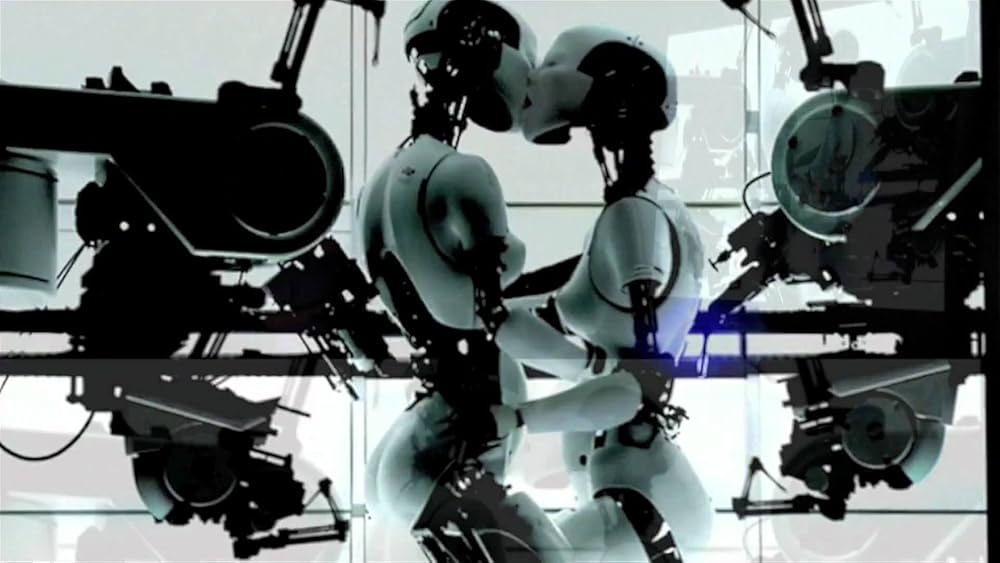
Donna
J. Haraway kann neben Judith Butler und Kimberlé W. Crenshaw als die
einflussreichste feministische Autor:in der Gegenwart betrachtet werden.
Nach Anfängen in der feministischen (Natur-)Wissenschaftskritik ist sie
vor allem mit ihrem „Manifest für Cyborgs“ aus dem Jahr 1985 berühmt
geworden.
Die Cyborg verkörpert darin eine hybride Position zwischen
menschlich-animalischem Organismus und Maschine. Damit steht sie
gleichzeitig für ein Selbst, dessen Handlungsfähigkeit nicht auf
Identität und Abgrenzung, sondern auf Differenz und Partialität beruht –
und auf der gerade daraus resultierenden Möglichkeit der Verbindung mit
anderen über scheinbar festgelegte Grenzen hinweg. Die Frage, wie man
angesichts einer immer gefährdeteren, aber nichtsdestotrotz gemeinsam
geteilten Welt Visionen für deren Zukunft entwickeln, solidarische
Bündnisse schließen und neue Verwandtschaftsverhältnisse eingehen kann,
beschäftigt Haraway dabei bis zu ihren aktuellsten Veröffentlichungen.
Das Seminar möchte sich ihrem „tentakulären Denken“ anhand ausgewählter
Beispiele annähern.
Raum: CIP-Pool RZ3 (RZ 1.04)
Inhalt:
Inhalt:
Inhalt:
Inhalt:
Inhalt:
Inhalt:
Inhalt:
Inhalt:
Raum: CIP-Pool PT2 (PT 2.0.2)
Inhalt:
Inhalt:
Inhalt:
Raum: CIP-Pool PT2 (PT 2.0.2)
Inhalt:
Inhalt:
Inhalt:
Inhalt:
Inhalt:
Inhalt:
Inhalt:
Inhalt:
Inhalt:
Raum: CIP-Pool RZ3 (RZ 1.04)
Inhalt:
Inhalt:
Raum: CIP-Pool PT2 (PT 2.0.2)
Inhalt:
Inhalt:
Inhalt:
Inhalt:
Raum: CIP-Pool PT2 (PT 2.0.2)
Inhalt:
Inhalt:
Inhalt:
Inhalt:
Inhalt:
Morphologie und Syntax stellen die Kernbereiche der Grammatik dar. Sie untersuchen die Struktur von Wörtern (Morphologie) und größeren Einheiten, wie z.B. Phrasen oder Sätzen, (Syntax). Der Kurs vermittelt die Grundlagen zur Beschreibung und Analyse von morphologischen und syntaktischen Strukturen in den Sprachen der Welt.
Dieser Kurs soll in die Grundlagen der Morphologie und Syntax einführen. Wir werden uns zunächst mit der Morphologie beschäftigen und grundlegende Konzepte besprechen; dazu gehören die verschiedenen Wortarten (Nomen, Verben, Adjektive, etc.) und andere morphologische Einheiten. Im Anschluss sollen verschiedene Arten von Wortbildungsprozessen, also Flexion, Derivation und Komposition, vorgestellt werden; wir werden besprechen, wodurch sich diese Wortbildungsprozesse auszeichnen und auch, wie sich Derivation und Komposition sowie Flexion und Derivation voneinander abgrenzen lassen. Entsprechend sind das Verhältnis von Wörtern und Phrasen, aber auch die Produktivität morphologischer Prozesse weitere Themen dieses Kurses. Wir werden uns außerdem mit den Schnittstellen der Morphologie zur Phonologie und zur Syntax beschäftigen; Letzteres wird dann überleiten zum zweiten Teil des Kurses, der Einführung in die Syntax. Hier sollen zunächst syntaktische Funktionen (Subjekt, Prädikat, Objekt) erläutert werden, bevor grammatische Relationen und die Konstituentenstruktur besprochen werden; die letzten beiden Themen beschäftigen sich mit der Frage, wie syntaktische Funktionen markiert und innerhalb eines Satzes angeordnet werden können. Anschließend soll das Konzept der Dependenz erläutert werden; unter Dependenz versteht man die Abhängigkeit eines Elementes im Satz von einem anderen (wie etwa im Deutschen zwischen Adjektiv und Substantiv). Weitere Themen werden Strukturen der Verbalphrase sein: Valenz (also die Anzahl der Argumente des Verbs), die Markierung von Partizipanten sowie Tempus, Modus und Aspekt. Abschließend werden wir uns mit Möglichkeiten der Satzverknüpfung, der Koordination und der Subordination, auseinander setzen. Neben Beispielen aus dem Deutschen werden auch zahlreiche Beispiele aus nicht-indoeuropäischen Sprachen verwendet werden, so dass die Teilnehmer dieses Kurses einen Einblick in die Typologie morphologischer und syntaktischer Kategorien erhalten.
Das erste Tutorium findet erst in der zweiten Vorlesungswoche, am 22.04. statt!
Hier tragen Sie die Kursbeschreibung ein.
In this seminar we will elaborate on contemporary topics in developmental science, such as:
· Nature versus nurture: On the early emergence of concepts in the developing human mind
· The evolutionary roots of human prosocial behavior
· The primacy role of culture in human development
· Are there general learning principles that drive human development?
· …
The final topics of the seminar will be decided on in the first session.
The seminar will be a mix of inputs by the lecturer, short student presentations, group discussions, and guest lectures.
In this seminar we will elaborate on contemporary topics in developmental science, such as:
· Nature versus nurture: On the early emergence of concepts in the developing human mind
· The evolutionary roots of human prosocial behavior
· The primacy role of culture in human development
· Are there general learning principles that drive human development?
· …
The final topics of the seminar will be decided on in the first session.
The seminar will be a mix of inputs by the lecturer, short student presentations, group discussions, and guest lectures.
Begleitübung zur Vorlesung Nr. 35341 Theorien und Modelle der Mehrsprachigkeitsforschung I (MR-MA-M01)
Mehrsprachigkeit ist nicht nur ein prägendes Merkmal des europäischen Gedankens, sondern ist schlichtweg mittlerweile auch zu einer gesellschaftlichen Realität geworden und hat in den letzten Jahren ein massives Forschungsinteresse geweckt, das sich gegenwärtig in einer großen Menge an Publikationen niederschlägt, in denen sich die Komplexität des Themas deutlich widerspiegelt: Mehrsprachigkeit ist Teil der Linguistik, indem sie Fragen nach Spracherwerbstheorien, Transfer- und Interferenzphänomen, Code-Switching usw. aufwirft, und ist zugleich in der Soziologie verankert, da sie einige gesellschaftliche Gruppen besonders prägt, darunter autochthone Minderheiten (Dänisch, Friesisch, Saterfriesisch, Ober-/Niedersorbisch) ebenso wie Personen mit Migrationshintergrund. Daran schließt sich die Frage an, wie klassische mehrsprachige Nationen – Schweiz, Spanien oder Kanada – dieser Sachlage politisch begegnen. Auch die EU trägt deutliche Züge eines Projekts der Mehrsprachigkeit. Immer deutlicher wird auch die Rolle von Multikulturalität und damit von Sprachlichkeit für den Erfolg von Wirtschaftsunternehmen. Wie eine Gesellschaft mit Mehrsprachigkeit umgeht, zeigt sich weiterhin im medialen Umgang damit, der sich vor allem im 20. Jh. im Werk von mehrsprachigen Schriftstellern widerspiegelt. Nicht zu vergessen sind zudem die didaktischen Dimensionen von Mehrsprachigkeit, und dies ebenso bereits im Elternhaus, im Vorschulalter wie während der schulischen Ausbildung.
Die Vorlesung soll einen Überblick über all diese Bereiche sowie grundlegende theoretische Konzepte und praktische Beispiele vermitteln.
Zur vorbereitenden Lektüre sei empfohlen:
Busch, Brigitta, Mehrsprachigkeit, Stuttgart: UTB, 2013.
Müller, Natascha; Kupisch, Tanja; Schmitz, Katrin; Cantone, Katja, Einführung in die Mehrsprachigkeitsforschung, Tübingen: Narr, 2011.
Leistungspunkte: je nach Modulbeschreibung |
Klausur oder ggf. Hausarbeit |
Zielgruppe: Studierende aller romanistischen Studiengänge; Studierende im Zusatzstudium Mehrsprachigkeitsberatung, Studierende des Masterstudiengangs MaMuR.
Die mittelalterliche Kultur ist in vielfältiger Hinsicht von ganz
unterschiedlichen, agonalen Kommunikationsformen geprägt, die in einem
mehr oder weniger öffentlichen Raum stattfinden konnten:
Streitgespräche, Disputationen, Spott- und Provokationsreden, aber auch
Lehrgespräche oder Selbstgespräche, die wie Gespräche mit einem
Gegenüber (dem ‚Anderen‘) konzipiert sind. In diesen Dialogformen finden
sich kulturelle, religiöse, geschlechtliche und soziale Differenzen
reflektiert: Es geht um Fragen von Macht und Autorität, um
(Glaubens-)Wahrheit und Identität. Interessant sind gerade die Formen
der Dialogizität, die wie Wettkämpfe konzipiert sind, in denen konträre
Ansichten über das Wahre, das Richtige etc. einander gegenübergestellt
werden. Denn wer hat letztlich die Deutungshoheit? Wie generieren ganz
unterschiedliche Textgattungen Überzeugungen? Wie wird argumentiert und
mit Worten gestritten? Mittels Wunderwirken und Zweikämpfen wird die
Argumentation mitunter ohne Worte beendet.
Anhand zweier ‚Autoren‘ fragen wir nach potentiellen Regeln und
Strategien dieser Kommunikationsformen. Zum einen steht das Werk
Hartmanns von Aue im Mittelpunkt, insbesondere der Artusroman ‚Iwein‘
und die höfischen Legenden ‚Gregorius‘ und ‚Der Arme Heinrich‘. Zum
anderen wird das in etwa zeitgenössische Mirakelbuch des Zisterziensers
Cäsarius von Heisterbach in den Blick genommen, das als Lehrdialog
zwischen einem Novizen und seinem Meister konzipiert ist (‚Dialog über
die Wunder‘), aber auch intern zahlreiche agonale Gesprächssituationen
wiedergibt.
Von der gemeinsamen Textarbeit von Literaturwissenschaftler*innen und
Historiker*innen sowie von den geplanten Stadtspaziergängen in
Regensburg und Erlangen/Nürnberg versprechen sich die beiden Lehrenden
eine produktive Diskussionsatmosphäre, die neue Sichtweisen auf Texte
und Kontexte des 13. Jahrhunderts erlaubt.
This course aims to explore the intricate relationship between religion and politics during the Early and High Middle Ages, spanning the period from c.750 to c.1250, with a focus on key political theory concepts and the evolution of power dynamics that contributed to one of the hallmarks of European political thought - the division of religion from politics.
Delving into primary sources from the period, participants will analyze the intersection of sacred and secular authority, in the context of the challenges faced during this tumultuous era not only in the kingdoms usually covered in the textbooks on the Middle Ages (Carolingians, Capetian France, Roman Empire, British Isles, and the Papacy) but also in the lesser-known kingdoms (i.e., León, Aragon, Hungary, Poland, Bohemia). In other words, the course will range from the Iberian Peninsula to East-Central Europe and will cover the most foundational examples of political theory attested in various European regions.
Participants will unravel the complexities of political authority, the privileges embedded within religious spheres, and the gradual erosion of the king's quasi-sacral status in the latter half of the eleventh century. Through a meticulous examination of medieval manuscripts with the narrative texts, liturgical documents, political treatises, and visual representations, this course sheds light on the factors that elevated rulers to uniquely privileged figures with ties to the sacred. Employing cutting-edge digital humanities methodologies, this course equips students with advanced research tools for dissecting medieval power dynamics.
This interdisciplinary endeavor not only advances historical analysis but also offers profound insights into broader political theory concepts, relevant to both medieval and contemporary societies.
Anhand ausgewählter Beispiele, die in Gruppenarbeit analysiert und dann im Plenum präsentiert und diskutiert werden, thematisiert das Masterseminar die filmische Vergegenwärtigung Bayerns vornehmlich in kommerziellen Spielfilmen, kursorisch auch in filmischen Dokumentationen. Dabei werden nicht zuletzt methodische Fragen und quellenkritische Probleme dieses Genres zu erörtern sein: zum einen Fragen nach den wechselnden mentalen „Bildern“, Klischees und Stereotypen Bayerns (wie sie sich in Filmen spiegeln), zum anderen Fragen nach den Möglichkeiten und Grenzen, den Film als kultur- und mentalitätshistorische Quelle für breitere Denkströmungen seiner jeweiligen Entstehungszeit zu nutzen. – Das Seminar startet am 21.10.2025.
Literaturhinweise:
Wolfgang Jacobsen (Hg.), Geschichte des deutschen Films, 2. Aufl. Stuttgart 2004. – Harro Segeberg, Die Perfektionierung des Scheins. Das Kino der Weimarer Republik im Kontext der Künste, München 2000. – Ders. (Hg.), Mediale Mobilmachung (I: Das Dritte Reich und der Film, II: Hollywood, Exil und Nachkrieg), 2. Bde., München 2004/06. – Margit Szöllösi-Janze, „Aussuchen und abschließen“. Der Heimatfilm der fünfziger Jahre als historische Quelle, in: GWU 44 (1993), 308-321. – Hans Krah (Hg.), Bayern und Film, Passau 2007. – Jan-Ulrich Decker/Hans Krah (Hg.), Skandal und Tabubruch. Heile Welt und Heimat. Bilder von Bayern in Literatur, Film und anderen Künsten, Passau 2014. – Diana Kainz, Artikel „Bayernbild Film und Fernsehen“, in: Historisches Lexikon Bayerns online (https://www.historisches-lexikon-bayerns.de/Lexikon/Bayernbild_Film_und_Fernsehen).
Räume existieren nicht einfach, sondern werden fortlaufend gemacht – so auch in Bayern und Böhmen, die gerne als kontinuierlich verlaufende und zusammengehörende Kulturlandschaft romantisiert werden, und auch in der von beiden geteilten Grenze/Grenzregion, die als eine der ältesten Europas gilt und dennoch starken Wandlungsprozessen unterworfen war und ist. Das Projektseminar beschäftigt sich mit öffentlichen visuellen und narrativen Repräsentationen dieser Räume, den unterschiedlichen Begrifflichkeiten und ideologischen Konzepten, die damit verbunden werden, sowie den darin ablesbaren Fremd- und Selbstbildern. Diese Raumerzählungen und Raumbilder Bayerns, Böhmens und ihrer verflochtenen Grenzregion werden in ganz verschiedenen Zusammenhängen, Medien und Formaten verhandelt, erzählt, visualisiert, öffentlich sichtbar gemacht und propagiert oder auch verborgen und marginalisiert: in diversen Regional- und Grenzmuseen (z. B. in Domažlice, Furth im Wald, Waldmünchen oder Passau); in Historischen Festspielen wie dem Further Drachenstich oder Trenck der Pandur; in Land- wie Ansichtskarten; in Filmen, literarischen oder autobiographischen Erzählungen. Mit all diesen Facetten möchte sich das Seminar anhand exemplarischer und aussagekräftiger Beispiele beschäftigen. Am Beginn stehen dabei theoretisch-methodische Überlegungen zu Raumtheorien/Border Studies, Narratologie, Bildforschung und Museumsanalyse. Sodann werden in kleineren Arbeitsgruppen verschiedene, in unterschiedlichen Zeitkontexten entstandene Raumbegriffe und -konzepte aus dem bayerisch-böhmischen Gebiet untersucht (z. B. „Bayerische Ostmark“, „Zonenrandgebiet“, „pohraničí“, „Grünes Band“ etc.) sowie die erwähnten Medien und Formate erfasst, dokumentiert und analysiert, mit denen Bayern, Böhmen und die Grenze öffentlich wirksam präsentiert, symbolisiert und verankert wird (Ansichts- und Landkarten, Museen, Inszenierungen und Reenactments, Logos der Tourismuswerbung usw.). Welche Akteur*innen, Fördermechanismen und Funktionsweisen stehen hinter den öffentlichen räumlichen Repräsentationen? Welche Narrative, Raumorientierungen und region brandings scheinen in ihnen auf und/oder werden von ihnen (neu) geprägt? Und (wie) sind diese diachron und synchron aufeinander bezogen? Welche Formen und Möglichkeiten der politischen oder ökonomischen Instrumentalisierung und Vermarktung gibt es, und wie haben sich diese gewandelt? Schließlich ist es das Ziel des Projektseminars, auf der Basis dieser Recherchen und Erkundungen Konzepte, Wege und Kooperationen zu entwickeln, die Ergebnisse für eine breitere Öffentlichkeit zu vermitteln und dabei mit digitalen wie analogen Formen und Formaten zu experimentieren. Sie sollten für die Tatsache sensibilisieren, dass Raumdarstellungen und die dahinterstehenden Fremd- und Selbstbilder niemals naturnotwendig, sondern immer gemacht sind. Und sie sollten nicht zuletzt dazu dienen, in Austausch und Kontakt mit Akteur*innen aus der Praxis zu treten und damit auch Kompetenzen im Projekt- und Kulturmanagement zu sammeln.
Literaturhinweise:
Reisen und Tourismus gehören zu den Kernanliegen der Lebensgestaltung unserer Freizeit- und Konsumgesellschaft. Außerdem spiegeln sich darin Praktiken eines aktiven und populären „selling history“, dessen Protagonisten historische Narrative, Landschaften und Bilder nutzen und ökonomisieren. Das Masterseminar stellt dieses Phänomen in einen längeren zeitlichen und größeren strukturgeschichtlichen Kontext und analysiert, auch im Austausch mit Tourismus-Praktikern, Bedingungen, Inhalte und Ziele von Reisen, Fremdenverkehr und Tourismus vornehmlich im 19. und 20. Jahrhundert. Kombiniert wird dies mit Fragen nach regionalspezifischen Parametern Bayerns (bzw. bestimmter Gegenden und Städte Bayerns) als exponiertem Reise- und Tourismusziel sowie nach Formen der Institutionalisierung und Ausprägung der Tourismusindustrie, ihrer Techniken und Instrumentarien.
Literatur: Hermann Bausinger u.a. (Hg.), Reisekultur. Von der Pilgerfahrt zum modernen Tourismus, München 1991. – Rüdiger Hachtmann, Tourismus-Geschichte, Göttingen 2007. – – Martin Knoll, Touristische Mobilitäten und ihre Schnittstellen, in: Ferrum 88/2016, S. 84-93. – Martin Knoll, „Es kann aber nicht von gutem sein, dass heute sich zu viele dem Fremdenverkehre zuwenden“. Perialpine Streiflichter auf Tourismus und regionalen Wandel in Europa, online unter: http://eplus.uni-salzburg.at/obvusboa/content/titleinfo/1663056. – Bernhard Löffler, Das Land der Bayern. Geschichte und Geschichten von 1800 bis heute, München 2024. – Horst Opaschowski, Tourismus. Eine systematische Einführung, 2. Aufl. Opladen 1996. – Cord Pagenstecher, Der bundesdeutsche Tourismus. Ansätze zu einer Visual History: Urlaubsprospekte, Reiseführer, Fotoalben 1950-1990, 2. Aufl. Hamburg 2012. – Burkhard Pöttler (Hg.), Tourismus und Regionalkultur, Wien 1994. – John Urry/Jonas Larson, The Tourist Gaze 3.0, 3. Aufl. Los Angeles u.a. 2011. – Stichwort „Fremdenverkehr“ im Historischen Lexikon Bayerns (mit weiterer Lit.), online unter: https://www.historisches-lexikon-bayerns.de/Lexikon/Fremdenverkehr_(Von_den_Anf%C3%A4ngen_bis_1945)
Im Seminar "Didaktik der Mündlichkeit" erhalten Sie einen Einblick darüber, wie "Unterricht" geplant, aufgebaut und umgesetzt wird. Thematischer Schwerpunkt ist dabei die Gesprächsdidaktik.
Kurs: Schreibwerkstatt für Masterarbeit
Wissenschaftliches Schreiben ist eine eigene Schreibgattung, die festgelegten Regeln folgt. In der Schreibwerkstatt lernen Sie Grundlagen kennen, die Sie befähigen, akademische Texte anzufertigen.
Ausgewählte Themen sind:
• Wie funktioniert wissenschaftlicher Schreibstil?
• Welcher Struktur folgt eine akademische Arbeit?
• Welcher Schreibtyp bin ich?
• Wie entwickle ich eine Forschungsfrage?
• Wie zitiere ich korrekt?
• Wie vermeide ich Plagiatsvorwürfe?
• Was muss ich bei der Formatierung beachten?
Strategien zur effektiven Zeitplanung Ihrer Masterarbeit, Umgang mit Prokrastinationsverhalten und individuelle Beratungsangebote unterstützen Sie dabei, Ihre persönlichen Ziele zu erreichen.
Kursleitung:
Ass. jur. Eva Trappehl
Lehrbeauftragte und Schreibpeertutorin


Entwurf und Entwicklung interaktiver Systeme unter Einsatz aktueller Technologien (webbasiert). Anwendung von Prinzipien des Software Engineerings auf den Bereich der User Interface- und Grafikprogrammierung. Vermittlung von theoretischen Grundlagen und praktische Vertiefung anhand von Übungsaufgaben. Eigenständige Konzeption und Implementierung einer interaktiven Anwendung in einer Projektgruppe (Blockpraktikum).
Entwurf und Entwicklung interaktiver Systeme unter Einsatz aktueller Technologien (webbasiert). Anwendung von Prinzipien des Software Engineerings auf den Bereich der User Interface- und Grafikprogrammierung. Vermittlung von theoretischen Grundlagen und praktische Vertiefung anhand von Übungsaufgaben. Eigenständige Konzeption und Implementierung einer interaktiven Anwendung in einer Projektgruppe (Blockpraktikum).
Der Kurs Multimedia Engineering schließt an die Veranstaltungen Einführung in die Objektorientierte Programmierung (OOP) sowie Einführung in die Anwendungsentwicklung (Android) an. Sie vertiefen hier Ihre erworbenen Kenntnisse im Bereich der Programmierung und Softwareentwicklung. Dazu lernen Sie mit dem Browser eine neue Anwendungsplattform kennen und erwerben erste Erfahrungen im Bereich der Implementierung und Strukturierung von Javascript-Anwendungen. Javascript und der Browser dienen dabei als Mittel, um Ihnen zentrale Inhalte und Methoden der Softwaretechnik (engl. Software engineering) näher zu bringen. Im Kurs setzen Sie sich mit der bewussten Gestaltung von Architektur und Design von Software auseinander. Sie lernen die Qualität von Software-Implementierungen, insbesondere deren Quellcodes einzuschätzen und verwenden Methoden und Werkzeuge um diese zu steigern bzw. zu sichern. Vorhandene Kenntnisse im Bereich der Versionsverwaltung werden am praktischen Beispiel von git vertieft. Zusätzlich lernen Sie, diese Werkzeuge und Methoden im Rahmen der kollaborativen Softwareentwicklung sinnvoll einzusetzen.
GRIPS-Kurs zu Multimedia Engineering SS 2022
Entwurf und Entwicklung interaktiver Systeme unter Einsatz aktueller Technologien (webbasiert). Anwendung von Prinzipien des Software Engineerings auf den Bereich der User Interface- und Grafikprogrammierung. Vermittlung von theoretischen Grundlagen und praktische Vertiefung anhand von Übungsaufgaben. Eigenständige Konzeption und Implementierung einer interaktiven Anwendung in einer Projektgruppe (Blockpraktikum).
GRIPS (v4.5.x) wird von der Campus IT der Universität Regensburg betrieben. | Datenschutz | Kontakt | Impressum