
- Trainer/in: Karsten Rincke
Kursbereich: Kurse im Sommersemester 2025
Seminar zum studienbegleitenden Praktikum Grundschule [U]
Einführung in die Praxis des Musikunterrichts, Planung, Vor- und Nachbereitung von Lehrversuchen an Grund- und Hauptschule. Erfolgreicher Besuch der Einführungsveranstaltung, Anmeldung beim Praktikumsamt. Erfolgreicher Besuch der Einführungsveranstaltung, Anmeldung beim Praktikumsamt
Praktikum: Mi, 8.00-12.00,
Kooperationsschule: GS Regenstauf
Studienbegleitenden Praktikum Grund-/Mittelschule [U]
Mi 08.00 -12.15 Uhr, Grundschule Burgweinting
Kommentar: Die Lehrveranstaltung gibt Einblick in unterschiedliche Formen des Musikunterrichts an der Grund- /Mittelschule. Es werden Anwendungsfelder trainiert und im Hinblick auf Planung, Durchführung, Lehr- und Lernstrategien reflektiert. Das Seminar lebt von einem hohen Praxisanteil und der Möglichkeit, sich aktiv in musikbezogene und interdisziplinäre Lernfelder einzubringen.
Teilnehmerzahl: 5 (in Kooperation: Grundschule Burgweinting,
Betreuerin: Sibylle Robin).
Die Lehrveranstaltung gibt Einblick in unterschiedliche Formen des Musikunterrichts an der Mittelschule. Es werden Anwendungsfelder trainiert und im Hinblick auf Planung, Durchführung, Lehr- und Lernstrategien reflektiert. Das Seminar lebt von einem hohen Praxisanteil und der Möglichkeit, sich aktiv in musikbezogene und interdisziplinäre Lernfelder einzubringen.
Seminar
zum Studienbegleitenden Praktikum Grundschule [U]
Kommentar: Die Lehrveranstaltung gibt
Einblick in unterschiedliche Formen des Musikunterrichts an der Grund-
/Mittelschule. Es werden Anwendungsfelder trainiert und im Hinblick auf
Planung, Durchführung, Lehr- und Lernstrategien reflektiert. Das Seminar lebt
von einem hohen Praxisanteil und der Möglichkeit, sich aktiv in musikbezogene
und interdisziplinäre Lernfelder einzubringen.
Teilnehmerzahl: 5 (in Kooperation mit der Kreuzberg Grundschule Schwandorf, Betreuerin: Michaela Tobisch, Lin).
Literatur:
Eberhard, D. M. (2015): Referendariat Musik: Kompaktwissen für Berufseinstieg und Examensvorbereitung. Berlin: Cornelsen.
Grohé, M. (2011). Der Musiklehrer-Coach. Innsbruck: Helbling.
Strobl, M. (2016): 20 x klassische Musikstücke für 45 Minuten. Klasse 1/2. Ausgearbeitete Stunden zu Komponisten und ihren Werken. Mühlheim: Verlag an der Ruhr.
Erwartungen: Übernahme von Arbeitsaufträgen und Unterrichtsskizzen.
Portfolio am Ende des Seminars.Das Proseminar „Studientechniken“ richtet sich an Studienanfänger der Philosophie und wird idealerweise bereits im ersten Semester absolviert, zumal es Kompetenzen vermittelt, die für alle philosophischen Leistungen mit universitärem Anspruch Voraussetzung sind. Gegenstand sind neben Gesichtspunkten der Studienplanung (Wie bastle ich anhand von Prüfungsordnung und Modulbeschreibung einen für mich geeigneten Stundenplan? Welche Ansprechpartner helfen mir bei Problemen weiter?) vor allem die alltägliche studentische Praxis, von der Literaturrecherche über den adäquaten Umgang mit philosophischen Texten bis zum korrekten Zitieren.
Diese Kenntnisse werden in sechs Doppelstunden vermittelt (also Mitte Mai endet das Seminar), so dass Sie den Leistungsnachweisen in Ihren übrigen Kursen gut gerüstet entgegensehen können. Es gibt eine Montags- und eine Mittwochsgruppe.
Das Proseminar "Studientechniken" richtet sich vor allem an Studienanfänger. In diesem Kurs sollt ihr die Grundlagen wissenschaftlichen Arbeitens kennen- und anwenden lernen.
Leider, leider können wir auch dieses Semester aufgrund des aktuellen Infektionsrisikos durch den Coronavirus nicht direkt zusammen diskutieren und zusammen lesen/üben/das Gelernte anweden. Aber ich werde mich bemühen, das mit Hilfe von zusätzlichem Material und individuellen Fragen und Antworten per E-Mail zu kompensieren.
Alles weitere folgt zum Kursbeginn am 12.4.
Das Proseminar „Studientechniken“ richtet sich an Studienanfänger der Philosophie und wird idealerweise bereits im ersten Semester absolviert, zumal es Kompetenzen vermittelt, die für alle philosophischen Leistungen mit universitärem Anspruch Voraussetzung sind. Gegenstand sind neben Gesichtspunkten der Studienplanung (Wie bastle ich anhand von Prüfungsordnung und Modulbeschreibung einen für mich geeigneten Stundenplan? Welche Ansprechpartner helfen mir bei Problemen weiter?) vor allem die alltägliche studentische Praxis, von der Literaturrecherche über den adäquaten Umgang mit philosophischen Texten bis zum korrekten Zitieren.
Diese Kenntnisse werden in sechs Doppelstunden vermittelt (also Mitte November endet das Seminar), so dass Sie den Leistungsnachweisen in Ihren übrigen Kursen gut gerüstet entgegensehen können. Es gibt eine Montags- und eine Mittwochsgruppe.
Das Proseminar „Studientechniken” richtet sich an Studienanfänger*innen der Philosophie und wird idealerweise bereits im ersten Semester absolviert, zumal es Kompetenzen vermittelt, die für alle philosophischen Leistungen mit universitärem Anspruch Voraussetzung sind. Gegenstand sind neben Gesichtspunkten der Studienplanung (Wie erstelle ich anhand von Prüfungsordnung und Modulbeschreibung einen für mich geeigneten Stundenplan? Was ist bei der Kursanmeldung zu beachten? Welche Ansprechpartner helfen mir bei Problemen weiter?) vor allem die alltägliche studentische Praxis, von der Literaturrecherche über den adäquaten Umgang mit philosophischen Texten bis zum korrekten Zitieren. Nicht zuletzt widmen wir uns den klassischen Leistungsnachweisen (Referat, Hausarbeit). Besonders die Recherche und das Zitieren werden Gegenstand der Übungsaufgaben sein.
Das Proseminar "Studientechniken" richtet sich vor allem an Studienanfänger. In diesem Kurs sollt ihr die Grundlagen wissenschaftlichen Arbeitens kennen- und anwenden lernen.
Leider, leider können wir auch dieses Semester aufgrund des aktuellen Infektionsrisikos durch den Coronavirus nicht direkt zusammen diskutieren und zusammen lesen/üben/das Gelernte anweden. Aber ich werde mich bemühen, das mit Hilfe von zusätzlichem Material und individuellen Fragen und Antworten per E-Mail zu kompensieren.
Alles weitere folgt zum Kursbeginn am 2.11.
 Rezeptionsphänomene, die Bücher zu ‚Kultbüchern‘ stilisieren, werden
häufig durch ihre projektiven Leerstellen und die Möglichkeit einer
Identifikation erklärt. Die ‚Suche nach dem Selbst‘ trifft dabei sowohl
auf die Lesenden zu, die sich häufig auf der Schwelle in die Adoleszenz
befinden, als auch auf die Autoren bzw. die Autorinnen der Kultbücher
selbst. Häufig werden die Werke durch den Konnex von Literatur und Leben
sogar als sinnstiftende Lebenshilfe verstanden, es bilden sich
Lesekreise sowie eine Verehrung des Autors / der Autorin aus oder es
entstehen literarisch motivierte Trends. Dies soll im Vertiefungsseminar
anhand von Friedrich Gottlieb Klopstocks Der Hügel und der Hain, Johann Wolfgang von Goethes Die Leiden des jungen Werthers, Friedrich Nietzsches Also sprach Zarathustra, Rainer Maria Rilkes Die Weise von Liebe und Tod des Cornets Christoph Rilke, Hermann Hesses Unterm Rad, Erich Maria Remarques Im Westen nichts Neues und Hermann Hesses Der Steppenwolf behandelt
werden, die entwicklungspsychologisch verschiedene Aspekte der
literarischen Ich-Suche beinhalten und / oder berühmte (historische)
Rezeptionen aufweisen. Übergeordnet soll dabei auch behandelt werden,
wie es zu den Rezeptionsphänomenen von ‚Kultbüchern‘ kommt. Durch die
Arbeit mit Annotation Studio oder Voyant erfolgt
weiterhin ein zielgerichteter Einsatz von Anwendungen der Digital
Humanities. Das Seminar versteht sich als Beitrag zur Vertiefung und
Differenzierung des literaturgeschichtlichen Wissens und Denkens.
Rezeptionsphänomene, die Bücher zu ‚Kultbüchern‘ stilisieren, werden
häufig durch ihre projektiven Leerstellen und die Möglichkeit einer
Identifikation erklärt. Die ‚Suche nach dem Selbst‘ trifft dabei sowohl
auf die Lesenden zu, die sich häufig auf der Schwelle in die Adoleszenz
befinden, als auch auf die Autoren bzw. die Autorinnen der Kultbücher
selbst. Häufig werden die Werke durch den Konnex von Literatur und Leben
sogar als sinnstiftende Lebenshilfe verstanden, es bilden sich
Lesekreise sowie eine Verehrung des Autors / der Autorin aus oder es
entstehen literarisch motivierte Trends. Dies soll im Vertiefungsseminar
anhand von Friedrich Gottlieb Klopstocks Der Hügel und der Hain, Johann Wolfgang von Goethes Die Leiden des jungen Werthers, Friedrich Nietzsches Also sprach Zarathustra, Rainer Maria Rilkes Die Weise von Liebe und Tod des Cornets Christoph Rilke, Hermann Hesses Unterm Rad, Erich Maria Remarques Im Westen nichts Neues und Hermann Hesses Der Steppenwolf behandelt
werden, die entwicklungspsychologisch verschiedene Aspekte der
literarischen Ich-Suche beinhalten und / oder berühmte (historische)
Rezeptionen aufweisen. Übergeordnet soll dabei auch behandelt werden,
wie es zu den Rezeptionsphänomenen von ‚Kultbüchern‘ kommt. Durch die
Arbeit mit Annotation Studio oder Voyant erfolgt
weiterhin ein zielgerichteter Einsatz von Anwendungen der Digital
Humanities. Das Seminar versteht sich als Beitrag zur Vertiefung und
Differenzierung des literaturgeschichtlichen Wissens und Denkens.
Veranstaltungstyp: - Übung zu Theorie und Methode der Geschichtswissenschaft
Vorlesungsverzeichnis Nr.: 33
Zeit: Mi 16-19
Dauer: 4 Semesterwochenstunden
Turnus: 14-täglich
Beginn: 20.10.2010
Raum: 017 WIOS
Voraussichtliche Termine: 20.10./27.10./10.11./24.11./08.12./22.12./12.01./09.02.
Im Wintersemester 2010 startet die Filmreihe „Südosteuropa im Film“ am Lehrstuhl für Südost- und Osteuropäische Geschichte, die in den kommenden Semestern die Filmkultur südosteuropäischer Länder in den Mittelpunkt stellen wird. Der thematische und geographische Fokus liegt in diesem Semester auf Ungarn. Es werden insgesamt sechs Spielfilmklassiker gezeigt, die historische Kernmomente und Entwicklungen in Ungarn (Zwischenkriegszeit, Zweiter Weltkrieg, 1956-er Revolution, Sozialismus, Systemumbruch) filmisch verarbeiten. Die Filme repräsentieren in chronologischer Folge den sich transformierenden filmischen Blick auf die ungarische Geschichte des zwanzigsten Jahrhunderts. Nach der öffentlichen Filmschau werden wir uns im Rahmen der Übung anhand ausgewählter Texte der vertiefenden Diskussion der Filme widmen und uns mit theoretischen Fragen zur visuellen Repräsentation von Geschichte im Film auseinandersetzen. Dabei sollen insbesondere die Transformation von Bildsprache, z.B. der zeitgenössischen Repräsentation gesellschaftlicher Gruppen, herausgearbeitet sowie Analysemethoden und Formen der historischen Quellenkritik vermittelt werden. Die ausgewählten Filme und die begleitende Lektüre werden zu Semesterbeginn bekannt gegeben.
Literatur: Ein ausführlicher Reader wird zu Beginn des Semesters online bei Moodle (https://elearning.uni-regensburg.de/login/index.php) eingestellt. Werner Faulstich: Grundkurs Filmanalyse. Paderborn 2008. James Monaco: Film verstehen. Kunst, Technik, Sprache, Geschichte und Theorie des Films und der Neuen Medien. Reinbek bei Hamburg 2009. Gerhard Paul (Hg.): Visual History. Ein Studienbuch, Göttingen 2006. Christa Blümlinger (Hg.), Sprung im Spiegel. Filmisches Wahrnehmen zwischen Fiktion und Wirklichkeit, Wien 1990. John E. O’Connor, Teaching History with Film and Television. Washington, DC. 1987. Louis Giannetti, Understanding Movies. Englewood Cliffs, New Jersey 1996. Pierre Sorlin, The Film in History. Restaging the Past. Oxford 1980.
Hinweise: Gute Englischkenntnisse sind erforderlich.
Anmeldung: Ab sofort und bis zum 30.09.2010 an friederike.kind-kovacs@geschichte.uni-regensburg.de bzw. unter https://elearning.uni-regensburg.de
Modul/e:
GES-LA-M
GES-M
Leistungspunkte: 4
Leistungsanforderungen:
Acquiring a fundamental knowledge of concepts and characteristics of surfaces. In addition, this module covers methods of preparing surfaces and growing layers. Experimental research methods will be discussed.
Der Klimawandel erfordert ein zügiges Handeln aller Akteure. Neben Staat und Konsumenten sind auch die Unternehmen gefordert, einen entsprechend großen Beitrag zu leisten. Nach der Identifizierung der volkswirtschaftlichen Ursachen des anthropogen verursachten Klimawandels gilt es, die existierenden Unternehmens- und Geschäftsfeldstrategien hinsichtlich ihrer Nachhaltigkeitsorientierung zu überprüfen und entsprechende Anpassungen vorzunehmen. Im volkswirtschaftlichen Teil werden Werkzeuge wie der Ökologische Fußabdruck, die Umweltökonomische Gesamtrechnung (UGR) oder Input-Output-Accounting unter Berücksichtigung der Ressourcenschonung vorgestellt. Ziel des interdisziplinären volks- und betriebswirtschaftlichen Kurses ist es letztlich, die Studierenden angesichts dieses Wissenschaftsbereiches in die Lage zu versetzen, Problemlösungen auf betriebswirtschaftlicher Ebene zu entwickeln. Dies beinhaltet die Implementierung von Nachhaltigkeit auf strategischer Ebene sowie deren Umsetzung im operativen Bereich, begleitet durch ein entsprechendes CSR/ Nachhaltigkeits-Reporting. Dies mündet schließlich in der Fragestellung, welche Rolle Social Responsible Investments als Treiber des Nachhaltigkeitsgedankens spielen.

Sustainability management pursues the goal of an impact-oriented and systematic integration of sustainability into all business management areas and concepts. In this module, we particularly cover:
Die Vorlesung Sustainable Real Estate (6 ECTS) richtet sich an Studierende des Master of Science in Real Estate.
Sie soll den immobilienwirtschaftlichen Blick für das Thema Nachhaltigkeit schärfen, indem das Haus der Immobilienökonomie unter dem Einfluss des Triple Bottom Line Ansatzes betrachtet wird. Die Vorlesung enthält u.a. folgende Schwerpunkte:
This seminar will deal with scientific writing in different context with a focus on writing a competitive research proposal.
Coursework:
The P.I.'s of the organic/inorganic instutes will provide a pool of research topics from which the students can choose an area of interest. The students are then asked to write a research proposal which will be defended in a short oral-presentation near the end of the semester.
This seminar will deal with scientific writing in different context with a focus on writing a competitive research proposal.
Coursework:
The P.I.'s of the organic/inorganic instutes will provide a pool of research topics from which the students can choose an area of interest. The students are then asked to write a research proposal which will be defended in a short oral-presentation near the end of the semester.
This course is about the relation between language, space and time. Spatial cognition is at the heart of our thinking, as spatial thinking provides us with analogies and tools for understanding the world around us. The space further extends its meanings into the domain of time. The association between space and time is arguably a human universal, documented, as preceding the development of language. This space-time linkage is reflected in linguistic metaphors the world over but also in non-linguistic artifacts, conventions and other manifestations of human culture and cognition.
Primary reading:
Levinsohn, S. C. (2004). Space in Language and Cognition: Explorations in Cognitive Diversity. Cambridge: Cambridge University Press.
Senft, G. (Ed.) (1997). Referring to space: Studies in Austronesian and Papuan languages. Oxford: Oxford University Press.
Admiraal, F. (2016). A grammar of space in Baure: A study on the linguistic encoding of spatial reference. (PhD dissertation), LOT, Utrecht.
+ several papers on the topic
Das übergeordnete Erkenntnisziel der Allgemeinen
Sprachwissenschaft ist es, Gemeinsamkeiten und Verschiedenheiten der Sprachen
auf allen Ebenen des Sprachsystems (Lautsystem, Morphologie, Syntax, Lexik) zu
erforschen. Es geht um die Universalität und Diversität in den Sprachen der
Welt. Es handelt sich um eine empirische Frage. Methodisch verlangt diese
Forschung den systematischen Vergleich der Sprachen miteinander. In dem Seminar
sollen die wichtigsten Ergebnisse der beschreibenden Typologie auf der Ebene
der Syntax besprochen werden. Dazu gehören Themen wie Wortstellung, Kasusmarkierung,
Kongruenz, Diathesen, bzw. valenzverändernde Operationen, Grammatische
Relationen, Personenmarkierung, Evidentialität, usw. Einige der traditionell
als universal angesehenen grammatischen Begriffe, wie z.B. der Begriff des
Subjekts, erweisen sich heute als
sprachspezifisch. Im Laufe der letzten Jahrzehnte hat sich der
Forschungsschwerpunkt von der Suche nach den sprachlichen Universalien hin zur
Suche nach funktionalen Erklärungsmöglichkeiten für die Diversität in den
Sprachen verschoben. Daher sollen in dem Seminar auch die Theorien besprochen
werden, die versuchen die ungleiche Verteilung und Diversität grammatischer
Konstruktionen in den Sprachen entweder durch Sprachkontakt oder durch
allgemeine kommunikative Bedingungen und Anforderungen zu erklären. Die inzwischen
umfangreiche Literatur zur Sprachtypologie und zu einzelnen speziellen Themen
der typologischen Forschung wird zu Beginn des Semesters besprochen; ebenso wie
das Programm.
Die Einführung in das wissenschaftliche Arbeiten ist für ein Studium der Klassischen Archäologie unabdingbar; denn sie vermittelt die grundlegenden Kenntnisse und Fertigkeiten für eine erfolgreiche Erstellung von Referaten und Hausarbeiten: Literaturrecherche, Literaturgattungen, Zitierrichtlinien, Bildrecherche, Erstellung von Präsentationen, Gliederungen etc. Der einmalige Besuch dieser Veranstaltung ist daher Voraussetzung für den Besuch der archäologischen Pro- und Hauptseminare; aufgrund der Konzentration des Kurses auf die beiden ersten Freitage der Vorlesungszeit kann er aber auch parallel zum ersten Proseminar besucht werden.

Herzlich willkommen im Begleitkurs: "Tag der digitalen Lehre - Angewandte Schreibkompetenz: KI meets vhb".
Hier finden Sie das Poster, das dazugehörige ausführlichere Skript sowie eine Beispiellektion aus unserem Kurs.
Dieser Kurs steht sowohl zur Anmeldung zur Veranstaltung "Tag der digitalen Lehre an der Uni Regensburg" am 09.10.2017, wie auch zur Information und Dokumentation der Veranstaltung zur Verfügung.
Wenn Sie sich für diese Veranstaltung anmelden wollen, dann schreiben Sie sich bitte über den Button unten in diesem Kurs ein.
mit freundlichen Grüßen,
das GRIPS-Team des Rechenzentrums und das Team des Verbundprojekts der bayerischen Universitäten ProfiLehrePlus (PLP)
Dieser Kurs steht sowohl zur Anmeldung zur Veranstaltung "Tag der digitalen Lehre an der Uni Regensburg" am 02.10.2018, wie auch zur Information und Dokumentation der Veranstaltung zur Verfügung.
Wenn Sie sich für diese Veranstaltung anmelden wollen, dann schreiben Sie sich bitte über den Button unten in diesem Kurs ein.
mit freundlichen Grüßen,
das GRIPS-Team des Rechenzentrums und das Team des Verbundprojekts der bayerischen Universitäten ProfiLehrePlus (PLP)
Grußworte, Keynotes, Impulsvorträge & Beiträge des Tags der digitalen Lehre 2020 (28. - 30.09.2020)
Grußworte, Keynotes & Good-Practice-Beispiele des Tags der digitalen Lehre 2022 (27. & 28.09.2022)
Grußworte, Keynotes & Good-Practice-Beispiele des Tags der digitalen Lehre 2024 (24. & 25.09.2024)
Zielgruppe:
Inhalt:
Zielgruppe:
Inhalt:
Zielgruppe:
Organisationsentwicklung VW lädt Sie zu einem geplanten Zoom-Meeting ein.
Thema: 2. Tag der Prozesse (01.07.2026)
Zeit: 21. Mai 2026 08:00 AM Amsterdam, Berlin, Rom, Stockholm, Wien
An Zoom-Meeting teilnehmen
https://uni-regensburg.zoom-x.de/j/69545716459?pwd=bfR345T3SAX7mghockiO9ysmBfEIY3.1
Meeting-ID: 695 4571 6459
Kenncode: 824932
---
Schnelleinwahl mobil
+496938980596,,69545716459# Deutschland
---
Über SIP beitreten
• 69545716459@lej.zmeu.us
Beitreten – So geht's
https://uni-regensburg.zoom-x.de/meetings/69545716459/invitations?signature=djUHt6hUz1uEHqDCBSUsGDALNHTo7CW7NadED60pTZs
Zielgruppe:
Organisationsentwicklung VW lädt Sie zu einem geplanten Zoom-Meeting ein.
Thema: 2. Tag der Prozesse (01.07.2026)
Zeit: 21. Mai 2026 08:00 AM Amsterdam, Berlin, Rom, Stockholm, Wien
An Zoom-Meeting teilnehmen
https://uni-regensburg.zoom-x.de/j/69545716459?pwd=bfR345T3SAX7mghockiO9ysmBfEIY3.1
Meeting-ID: 695 4571 6459
Kenncode: 824932
---
Schnelleinwahl mobil
+496938980596,,69545716459# Deutschland
---
Über SIP beitreten
• 69545716459@lej.zmeu.us
Beitreten – So geht's
https://uni-regensburg.zoom-x.de/meetings/69545716459/invitations?signature=djUHt6hUz1uEHqDCBSUsGDALNHTo7CW7NadED60pTZs
Zielgruppe:
Organisationsentwicklung VW lädt Sie zu einem geplanten Zoom-Meeting ein.
Thema: 2. Tag der Prozesse (01.07.2026)
Zeit: 21. Mai 2026 08:00 AM Amsterdam, Berlin, Rom, Stockholm, Wien
An Zoom-Meeting teilnehmen
https://uni-regensburg.zoom-x.de/j/69545716459?pwd=bfR345T3SAX7mghockiO9ysmBfEIY3.1
Meeting-ID: 695 4571 6459
Kenncode: 824932
---
Schnelleinwahl mobil
+496938980596,,69545716459# Deutschland
---
Über SIP beitreten
• 69545716459@lej.zmeu.us
Beitreten – So geht's
https://uni-regensburg.zoom-x.de/meetings/69545716459/invitations?signature=djUHt6hUz1uEHqDCBSUsGDALNHTo7CW7NadED60pTZs
Zielgruppe:
Organisationsentwicklung VW lädt Sie zu einem geplanten Zoom-Meeting ein.
Thema: 2. Tag der Prozesse (01.07.2026)
Zeit: 21. Mai 2026 08:00 AM Amsterdam, Berlin, Rom, Stockholm, Wien
An Zoom-Meeting teilnehmen
https://uni-regensburg.zoom-x.de/j/69545716459?pwd=bfR345T3SAX7mghockiO9ysmBfEIY3.1
Meeting-ID: 695 4571 6459
Kenncode: 824932
---
Schnelleinwahl mobil
+496938980596,,69545716459# Deutschland
---
Über SIP beitreten
• 69545716459@lej.zmeu.us
Beitreten – So geht's
https://uni-regensburg.zoom-x.de/meetings/69545716459/invitations?signature=djUHt6hUz1uEHqDCBSUsGDALNHTo7CW7NadED60pTZs
Zielgruppe:
Organisationsentwicklung VW lädt Sie zu einem geplanten Zoom-Meeting ein.
Thema: 2. Tag der Prozesse (01.07.2026)
Zeit: 21. Mai 2026 08:00 AM Amsterdam, Berlin, Rom, Stockholm, Wien
An Zoom-Meeting teilnehmen
https://uni-regensburg.zoom-x.de/j/69545716459?pwd=bfR345T3SAX7mghockiO9ysmBfEIY3.1
Meeting-ID: 695 4571 6459
Kenncode: 824932
---
Schnelleinwahl mobil
+496938980596,,69545716459# Deutschland
---
Über SIP beitreten
• 69545716459@lej.zmeu.us
Beitreten – So geht's
https://uni-regensburg.zoom-x.de/meetings/69545716459/invitations?signature=djUHt6hUz1uEHqDCBSUsGDALNHTo7CW7NadED60pTZs
Zielgruppe:
Organisationsentwicklung VW lädt Sie zu einem geplanten Zoom-Meeting ein.
Thema: 2. Tag der Prozesse (01.07.2026)
Zeit: 21. Mai 2026 08:00 AM Amsterdam, Berlin, Rom, Stockholm, Wien
An Zoom-Meeting teilnehmen
https://uni-regensburg.zoom-x.de/j/69545716459?pwd=bfR345T3SAX7mghockiO9ysmBfEIY3.1
Meeting-ID: 695 4571 6459
Kenncode: 824932
---
Schnelleinwahl mobil
+496938980596,,69545716459# Deutschland
---
Über SIP beitreten
• 69545716459@lej.zmeu.us
Beitreten – So geht's
https://uni-regensburg.zoom-x.de/meetings/69545716459/invitations?signature=djUHt6hUz1uEHqDCBSUsGDALNHTo7CW7NadED60pTZs
Unbekannte Vielfalt - Pflanzen und Tiere auf dem Campus
Liebe Studentinnen und Studenten,
unser Hochschulcampus ist reich an verschiedenen Lebensräumen und beherbergt eine Vielzahl zum Teil seltener Tier- und Pflanzenarten. Um diese Vielfalt erfahrbar zu machen, wollen wir im Rahmen der Hochschulinitiative „Naturschutz und Nachhaltigkeit“ (Willkommen bei der Initiative Naturschutz & Nachhaltigkeit auf dem HS-Campus - Universität Regensburg (uni-regensburg.de) auf dem Campus der Universität Regensburg und der Ostbayerischen Technischen Hochschule Regensburg ausgewählte Tier- und Pflanzengruppen erfassen.
Im Sommersemester sollen unter anderem die hier vorkommenden Tagfalter beobachtet und identifiziert werden. Eine erste Veranstaltung mit Anleitung und Einführung ist für den 11. Mai 2022 um 14:00 Uhr im geplant. Es ist geplant, die Ergebnisse zu veröffentlichen.
Studierende - idealerweise mit entsprechenden Vorkenntnissen - sind herzlich eingeladen, bei der Anleitung und wissenschaftlichen Begleitung mitzuwirken. Für Studierende der Biologie können Leistungspunkte im Bereich Berufsqualifikation anerkannt werden.
Interessierte Studierende aller Fakultäten melden sich bitte bis zum 9.5.2022in Grips an (unter erhard.strohm@ur.de, um das weitere Vorgehen zu koordinieren.
Prof. Dr. Erhard Strohm 03. Mai 2022
Veranstaltungstyp: - Hauptseminar für Lehramts-, BA- und Masterstudierende
Vorlesungsverzeichnis Nr.: 33 152
Zeit: Mo 12-14
Dauer: 2 Semesterwochenstunden
Turnus: wöchentlich
Beginn: 16.4.2012
Raum: WiOS 017
An additional English-language tutorial will be offered.
This graduate seminar is a jointly held seminar at Regensburg University and at Charles University Prague. The main aim of this co-taught project seminar is to develop a homepage about the oral history of the Czech-German Borderlands. While in previous semesters groups of students and researchers in Prague and Regensburg have conducted life-story interviews in the Czech-German borderlands, this year’s project course will aim at preparing the conducted life story interviews for a user-friendly online publication. While the course will–geographically—be taught separately at both universities, the students will regularly meet in interactive E-learning classes where they will be introduced to core texts about central issues as ethnic cleansing, forced migration and social exclusion/integration. In order to allow for a personal student encounter, two exchange visits to Prague and Regensburg will be organized throughout the semester. During these intense block seminars the German and Czech students will discuss lectures by invited speakers (Dr. Sarah Scholl-Schneider and others), work in small groups on interview material and write together short historical texts for the homepage. The outcomes of this larger oral history project, which aims at taking the oral histories of this border region online, will be published on the domain www.die-erzählte-grenze.de.
Literatur: Sarah Scholl-Schneider, Matěj Spurný, Miroslav Schneider, Marita Krauss: Sudetengeschichten. Vertriebene-Alteingesessene-Neusiedlier. Prag, Augsburg: Antikomplex 2010. Ondrej Matejka: Tragische Erinnerungsorte. Ein Führer durch die Geschichte einer Region 1938-1945. Prag: Antikomplex 2011. Friederike Kind-Kovács: "Historische Ambivalenzen von ‘Transfer’- und Grenzgeschichte: Bevölkerungsverschiebung und Literaturschmuggel im bayerisch-böhmischen Grenzraum", in: Markus A. Meinke (Hrsg.): Die tschechisch-bayerische Grenze im Kalten Krieg in vergleichender Perspektive. Politische, ökonomische und soziokulturelle Dimensionen. Regensburger Studien. Band 17. Regensburg 2011, S. 93-108. Eagle Glassheim: National Mythologies and Ethnic Cleansing: The Expulsion of Czechoslovak Germans in 1945. In: Central European History, Vol.33, No.4, (2000), p.463-486.
Hinweise: Very good English/German language knowledge is required.
Czech language knowledge is much appreciated.
An obligatory 2-day excursion to Prague is part of the seminar.
Anmeldung: Anmeldung per Mail an die Dozentin: friederike.kind-kovacs@geschichte.uni-regensburg.de.
Modul/e:
GES-LA-M
GES-MA-M
GES-M
Leistungspunkte: 10
Leistungsanforderungen:

The goal of this initiative is to foster exchange of fascinating mathematical topics and topics pertinent to academia, career and studies among talented students.
At the moment the focus is on marginalised groups, in particular women in mathematics, but the hope is that the development of society will make such a distinction redundant.
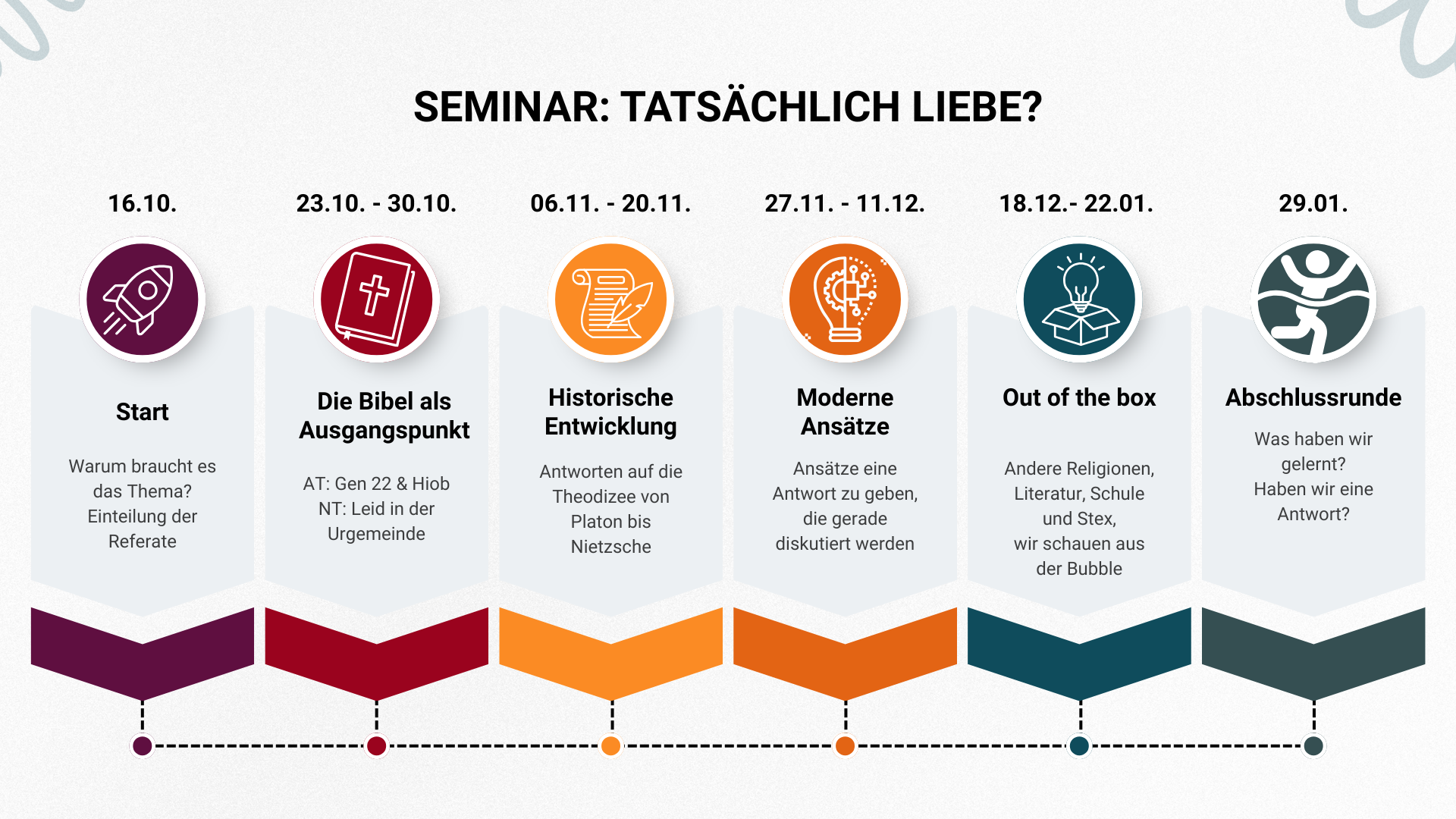
Krankheit, Katastrophe, Krieg – und mittendrin der Mensch mit seiner Frage: Wie kann ein guter, allmächtiger Gott so viel Leid zulassen?
Die Theodizee-Frage ist keine Randnotiz der Theologie, sondern ihr Stachel im Fleisch. Deshalb spürt dieses Seminar historischen und gegenwärtigen Antwortversuchen nach – von Hiob bis Auschwitz, von Augustinus bis Johann Baptist Metz – und fragt nach einem heutigen, theologisch verantwortbaren Zugang zu einem Gott, der gut sein soll, obwohl die Welt es oft nicht ist.
„Learning a foreign language is more than a simple task of assembling lexical items in grammatically accurate sentences. It involves learning to communicate with others in that language and such communication involves an engagement with culture.” (Liddicoat 2005). This seminar takes a cultural perspective on ELT as a central paradigm in current language teaching. On top of that, we will explore the use of media in ELT classrooms.
Liebe Studierende,
herzlich Willkommen zum GRIPS Kurs "Teaching Culture, Literature and Media".
Liebe Studierende,
herzlich Willkommen zum GRIPS Kurs "Teaching Culture, Literature and Media".
The number of adaptations of English literary classics that have been produced in the last few years indicates that they fascinate people to this day. Students, however, often perceive classics as antiquated, difficult to understand and boring, which reduces their willingness to engage with classical literature. From the perspective of English Language Education, these literary adaptations can be used to foster core competences of modern language learning and should, therefore, find a place in our classrooms.
To exhaust the full potential of literary classics, we will learn how their modern adaptations can be used to achieve the goals of foreign language learning (e.g. cultural, language, literary competences) in an engaging and motivating way. We will integrate different genres (short stories, movies, graphic novels/comics, short films, etc.) and explore these as independent literary productions as well as alongside the original texts. Ultimately, this serves to make English literary classics relevant to our students and reduce their fear of “dusty old books” in the foreign language.
Credit requirement: written reflection paper and in-class participation
This course builds on the introduction to TEFL (”Einführung in die Didaktik der englischen Sprache und Literatur”) and offers a combination of theoretical knowledge and classroom practice to those students who have opted for ”Englisch als Didaktikfach der Grundschule”.
The course is meant to develop both language competence and teaching skills and will therefore focus on classroom language, language learning games, communicative activities, storytelling, songs, intercultural learning, using CLIL in the primary classroom, and many other aspects of teaching English to very young learners.
Course requirements: presentation, practice lesson, term paper including exemplary lesson plan (”Unterrichtsentwurf”)
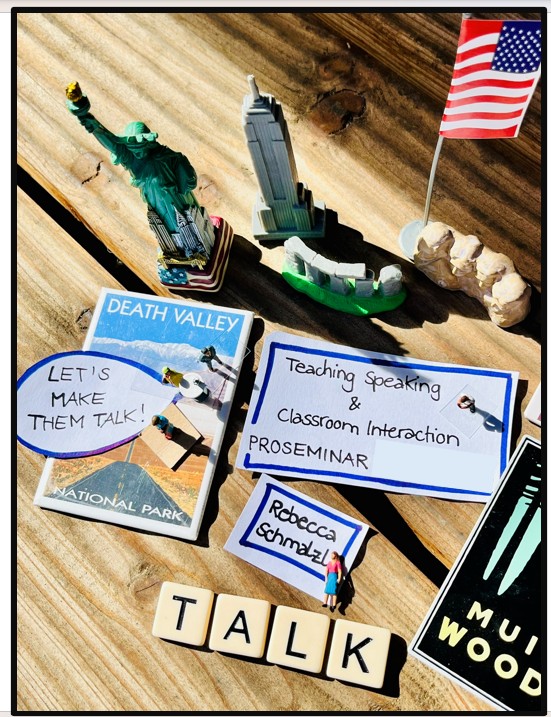
Let´s make them talk! But how can we foster meaningful oral communication in the EFL classroom? In light of the growing relevance of speaking competence in contemporary foreign language education, this seminar introduces key concepts, methods, and research findings related to oral communication and classroom interaction in English as a Foreign Language (EFL). Students explore communicative competence, interactional patterns, teacher talk, scaffolding, and the design of communicative speaking tasks across different school types. By combining theory and practical application, the seminar equips future teachers with tools to analyze classroom interaction and to design learning environments that encourage learners to speak, interact, and communicate effectively in English.
Credit Requirements: Assessment will be based on a group presentation and a written reflection (three to four pages) as well as regular attendance and active in-class participation.
Blockseminar
Let´s make them talk! But how can we foster meaningful oral communication in the EFL classroom? In light of the growing relevance of speaking competence in contemporary foreign language education, this seminar introduces key concepts, methods, and research findings related to oral communication and classroom interaction in English as a Foreign Language (EFL). Students explore communicative competence, interactional patterns, teacher talk, scaffolding, and the design of communicative speaking tasks across different school types. By combining theory and practical application, the seminar equips future teachers with tools to analyze classroom interaction and to design learning environments that encourage learners to speak, interact, and communicate effectively in English.
Credit Requirements: Assessment will be based on a group presentation and a written reflection (three to four pages) as well as regular attendance and active in-class participation.
|
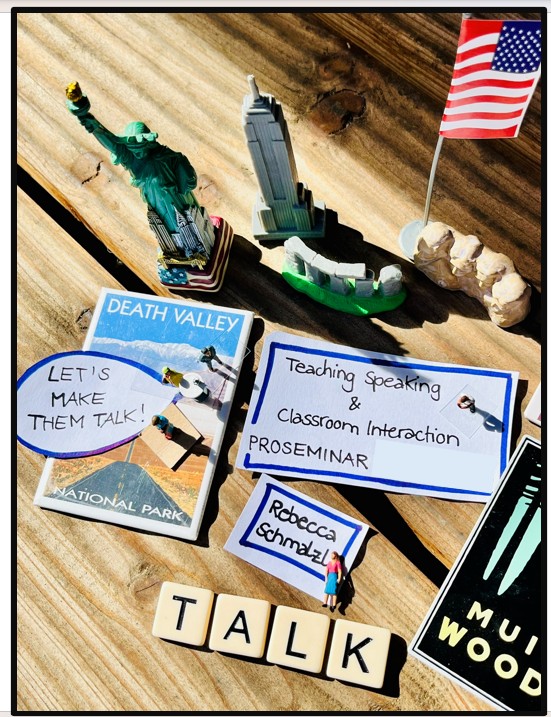
Let´s make them talk! But how can we foster meaningful oral communication in the EFL classroom? In light of the growing relevance of speaking competence in contemporary foreign language education, this seminar introduces key concepts, methods, and research findings related to oral communication and classroom interaction in English as a Foreign Language (EFL). Students explore communicative competence, interactional patterns, teacher talk, scaffolding, and the design of communicative speaking tasks across different school types. Particular emphasis is placed on bridging theory and classroom practice. Through the discussion of best-practice examples, teaching materials, digital tools, and hands-on activities, students critically reflect on how speaking can be fostered in meaningful, motivating, and inclusive ways. By combining theoretical perspectives with practical application, the seminar equips future teachers with tools to analyze classroom interaction and to design learning environments that encourage learners to speak, interact, and communicate effectively in English. Reading material as well as a topic overview and schedule will be announced in the first session. Credit Requirements: Assessment will be based on a micro teaching unit (group presentation) and a written reflection (three to four pages) as well as regular attendance and active in-class participation. Deadline for term papers: March 1, 27
|
|
Let´s make them talk! But how can we foster meaningful oral communication in the EFL classroom? In light of the growing relevance of speaking competence in contemporary foreign language education, this seminar introduces key concepts, methods, and research findings related to oral communication and classroom interaction in English as a Foreign Language (EFL). Students explore communicative competence, interactional patterns, teacher talk, scaffolding, and the design of communicative speaking tasks across different school types. Particular emphasis is placed on bridging theory and classroom practice. Through the discussion of best-practice examples, teaching materials, digital tools, and hands-on activities, students critically reflect on how speaking can be fostered in meaningful, motivating, and inclusive ways. By combining theoretical perspectives with practical application, the seminar equips future teachers with tools to analyze classroom interaction and to design learning environments that encourage learners to speak, interact, and communicate effectively in English. Reading material as well as a topic overview and schedule will be announced in the first session. Credit Requirements: Assessment will be based on a micro teaching unit (group presentation) and a written reflection (three to four pages) as well as regular attendance and active in-class participation. Deadline for term papers: March 1, 27
|

Grammatical competence and word knowledge lead to communicative competence. However, there are divergent opinions on how and when to teach grammar and vocabulary in the foreign language classroom. In this seminar, we will discuss the necessity of explicit grammar teaching as we look at the theoretical background, examine various methods, instructions, and activities for teaching grammar and vocabulary. Additionally, we take a closer look at terms and approaches such as project-learning and teaching (TBLL/TBLT), lexico-grammar, and discourse.
We develop, present, and discuss materials, learning tasks and activities for a project-based learning sequence. Credit requirements involve
Please note: As this is a block seminar in which a lot of peer-to-peer exchange and discussion will take place, it is important that you participate fully in all sessions. This also applies to the digital units.
Das filmische Melodrama wurde lange von der Filmkritik verachtet und von der Filmwissenschaft vernachlässigt. Die ablehnende Haltung zeigt sich auch in der Bezeichnung des Genres als ‚women’s film‘ und der Unterstellung, dass Hausfrauen ihre Nachmittage weinend im Kino verbringen, um durch die Überdominanz von Gefühlen ihren Alltag zu vergessen. Erst die 1970er Jahre lieferten wichtige Ansätze, die eine neue Deutung von Filmen des Genres ermöglichten: zum einen als hintergründige Filme, deren übertriebene, aber auch komplexe Ästhetik als gesellschaftskritische Kommentare gelesen werden können (zum Beispiel die Melodramen von Douglas Sirk aus den 1950er Jahren), zum anderen als Filme, die durch die Betonung von Emotion und Affekt die Zuschauenden auf unmittelbare Weise ansprechen, weswegen sie Linda Williams auch mit Horrorfilmen zu den body genres rechnet, zu Filmen, die körperliche Reaktionen auslösen. Politisierte Theorien des Feminismus haben nicht nur dazu beigetragen, den Tearjerker oder women’s film für die Filmwissenschaft zu entdecken, sondern auch deren Pendant im Fernsehen, die Soap Opera, als serielle, an das Programm und Wesen des Fernsehens angepasste Form neu zu deuten. Dieses Seminar wird sich mit den wichtigsten Theorien zum filmischen und televisuellen Melodrama beschäftigen und einige zentrale Filme oder Fernsehserien in Screenings zugänglich machen, um damit auch Kenntnisse über Theorien der Medienwissenschaft zu vermitteln. Es wird aber auch deutlich machen, dass das Melodrama nicht nur ein Genre, sondern auch ein Prinzip der Inszenierung ist, das mittlerweile in fast alle Filmgenres und Fernsehserien emigriert ist. Konzepte des Melodramas lassen sich daher als wichtige Perspektiven begreifen, um die emotionale und affektive Dimension von so unterschiedlichen audiovisuellen Erzeugnissen wie Game of Thrones oder Filmen des populären Kinos zu verstehen.
Grundlage des erfolgreichen Abschlusses des Seminars sind Anwesenheit und Beteiligung an der Seminardiskussion, Referat und Hauarbeit
This course is obligatory for all those students who will be doing their „fachdidaktisches Begleitpraktikum” this coming semester.
We will discuss crucial aspects of teaching English like how to present and practise vocabulary/grammar etc., how to teach listening and reading strategies, what to do about errors, how to individualize language learning, how to plan lessons, how to analyse teaching materials and so on. In particular, we will focus on the practical demands of teaching EFL to very young learners as this requires a specific methodology which is mainly based on authentic materials, playful activities and a lot of L2 input. The aim of this course is to provide all students with theoretical background and practical expertise for their own consistent implementation of competence-based education.
Students wanting to attend this course must have passed the „Einführungskurs”.
Credit Requirements: Assessment will be based on active in-class participation and on a written term paper.
This course is obligatory for all those students who will be doing their „fachdidaktisches Begleitpraktikum” this coming semester. Students should be aware that teaching English to very young learners requires a specific methodology which is mainly based on authentic materials, playful activities and a lot of L2 input. We will first of all analyze and discuss the methodological principals and then apply them to the planning of lessons, tasks and adequate forms of evaluation. Practical work and theoretical reflection will go hand in hand. In particular, we will deal with: rhymes and songs, games and activities, storytelling/picture books, cultural events and course books and other materials. Students wanting to attend this course must have passed the „Einführungskurs”.
Assessment will be based on active in-class participation and on a written term paper.
GRIPS (v4.5.x) wird von der Campus IT der Universität Regensburg betrieben. | Datenschutz | Kontakt | Impressum