
Liebe Studierende,
herzlich Willkommen zum GRIPS Kurs "Teaching Culture, Literature and Media".
- Trainer/in: Christian Knittl
- Trainer/in: Margit Prenninger
Kursbereich: Fachdidaktik Englisch
Liebe Studierende,
herzlich Willkommen zum GRIPS Kurs "Teaching Culture, Literature and Media".
This course builds on the introduction to TEFL (”Einführung in die Didaktik der englischen Sprache und Literatur”) and offers a combination of theoretical knowledge and classroom practice to those students who have opted for ”Englisch als Didaktikfach der Grundschule”.
The course is meant to develop both language competence and teaching skills and will therefore focus on classroom language, language learning games, communicative activities, storytelling, songs, intercultural learning, using CLIL in the primary classroom, and many other aspects of teaching English to very young learners.
Course requirements: presentation, practice lesson, term paper including exemplary lesson plan (”Unterrichtsentwurf”)
Let´s make them talk! But how can we foster meaningful oral communication in the EFL classroom? In light of the growing relevance of speaking competence in contemporary foreign language education, this seminar introduces key concepts, methods, and research findings related to oral communication and classroom interaction in English as a Foreign Language (EFL). Students explore communicative competence, interactional patterns, teacher talk, scaffolding, and the design of communicative speaking tasks across different school types. By combining theory and practical application, the seminar equips future teachers with tools to analyze classroom interaction and to design learning environments that encourage learners to speak, interact, and communicate effectively in English.
Credit Requirements: Assessment will be based on a group presentation and a written reflection (three to four pages) as well as regular attendance and active in-class participation.
Let´s make them talk! But how can we foster meaningful oral communication in the EFL classroom? In light of the growing relevance of speaking competence in contemporary foreign language education, this seminar introduces key concepts, methods, and research findings related to oral communication and classroom interaction in English as a Foreign Language (EFL). Students explore communicative competence, interactional patterns, teacher talk, scaffolding, and the design of communicative speaking tasks across different school types. By combining theory and practical application, the seminar equips future teachers with tools to analyze classroom interaction and to design learning environments that encourage learners to speak, interact, and communicate effectively in English.
Credit Requirements: Assessment will be based on a group presentation and a written reflection (three to four pages) as well as regular attendance and active in-class participation.
Blockseminar

Grammatical competence and word knowledge lead to communicative competence. However, there are divergent opinions on how and when to teach grammar and vocabulary in the foreign language classroom. In this seminar, we will discuss the necessity of explicit grammar teaching as we look at the theoretical background, examine various methods, instructions, and activities for teaching grammar and vocabulary. Additionally, we take a closer look at terms and approaches such as project-learning and teaching (TBLL/TBLT), lexico-grammar, and discourse.
We develop, present, and discuss materials, learning tasks and activities for a project-based learning sequence. Credit requirements involve
Please note: As this is a block seminar in which a lot of peer-to-peer exchange and discussion will take place, it is important that you participate fully in all sessions. This also applies to the digital units.
Das filmische Melodrama wurde lange von der Filmkritik verachtet und von der Filmwissenschaft vernachlässigt. Die ablehnende Haltung zeigt sich auch in der Bezeichnung des Genres als ‚women’s film‘ und der Unterstellung, dass Hausfrauen ihre Nachmittage weinend im Kino verbringen, um durch die Überdominanz von Gefühlen ihren Alltag zu vergessen. Erst die 1970er Jahre lieferten wichtige Ansätze, die eine neue Deutung von Filmen des Genres ermöglichten: zum einen als hintergründige Filme, deren übertriebene, aber auch komplexe Ästhetik als gesellschaftskritische Kommentare gelesen werden können (zum Beispiel die Melodramen von Douglas Sirk aus den 1950er Jahren), zum anderen als Filme, die durch die Betonung von Emotion und Affekt die Zuschauenden auf unmittelbare Weise ansprechen, weswegen sie Linda Williams auch mit Horrorfilmen zu den body genres rechnet, zu Filmen, die körperliche Reaktionen auslösen. Politisierte Theorien des Feminismus haben nicht nur dazu beigetragen, den Tearjerker oder women’s film für die Filmwissenschaft zu entdecken, sondern auch deren Pendant im Fernsehen, die Soap Opera, als serielle, an das Programm und Wesen des Fernsehens angepasste Form neu zu deuten. Dieses Seminar wird sich mit den wichtigsten Theorien zum filmischen und televisuellen Melodrama beschäftigen und einige zentrale Filme oder Fernsehserien in Screenings zugänglich machen, um damit auch Kenntnisse über Theorien der Medienwissenschaft zu vermitteln. Es wird aber auch deutlich machen, dass das Melodrama nicht nur ein Genre, sondern auch ein Prinzip der Inszenierung ist, das mittlerweile in fast alle Filmgenres und Fernsehserien emigriert ist. Konzepte des Melodramas lassen sich daher als wichtige Perspektiven begreifen, um die emotionale und affektive Dimension von so unterschiedlichen audiovisuellen Erzeugnissen wie Game of Thrones oder Filmen des populären Kinos zu verstehen.
Grundlage des erfolgreichen Abschlusses des Seminars sind Anwesenheit und Beteiligung an der Seminardiskussion, Referat und Hauarbeit
This course is obligatory for all those students who will be doing their „fachdidaktisches Begleitpraktikum” this coming semester.
We will discuss crucial aspects of teaching English like how to present and practise vocabulary/grammar etc., how to teach listening and reading strategies, what to do about errors, how to individualize language learning, how to plan lessons, how to analyse teaching materials and so on. In particular, we will focus on the practical demands of teaching EFL to very young learners as this requires a specific methodology which is mainly based on authentic materials, playful activities and a lot of L2 input. The aim of this course is to provide all students with theoretical background and practical expertise for their own consistent implementation of competence-based education.
Students wanting to attend this course must have passed the „Einführungskurs”.
Credit Requirements: Assessment will be based on active in-class participation and on a written term paper.
This course is obligatory for all those students who will be doing their „fachdidaktisches Begleitpraktikum” this coming semester. Students should be aware that teaching English to very young learners requires a specific methodology which is mainly based on authentic materials, playful activities and a lot of L2 input. We will first of all analyze and discuss the methodological principals and then apply them to the planning of lessons, tasks and adequate forms of evaluation. Practical work and theoretical reflection will go hand in hand. In particular, we will deal with: rhymes and songs, games and activities, storytelling/picture books, cultural events and course books and other materials. Students wanting to attend this course must have passed the „Einführungskurs”.
Assessment will be based on active in-class participation and on a written term paper.
|
Kursformat |
Vortrag via Zoom |
|
Vorkenntnisse |
keine |
|
Kursdauer |
Eine Stunde |
|
|
|
|
Termin |
Mittwoch, 15.07.2026 14:00 – 15:00 Uhr |
|
|
|
|
Ort |
Zoom |
|
Verfügbare Plätze |
unbegrenzt |
|
|
|
|
Anmeldung |
Kursnummer: 2602-A13 |
|
Kursleitung |
Klaus Schmidt |
What does it mean to conduct research in 'the field'? This lecture series explores the concept of 'terrains'—not just as physical landscapes, but as the archives, communities, and political spaces that define the Middle East and Central Asia.
We move beyond the map to examine the grit of scholarly work: the challenge of establishing trust in a community, the ethics of working in semi-authoritarian zones, and the friction between archival theory and ethnographic reality. After foundational introductions to the geography and history of these regions, the course transitions into a series of masterclasses led by world-class visiting scholars. By engaging with their latest projects and accompanying readings, students will learn how to unpack complex terrains with a critical, multiscalar eye. This course is open to all—from area studies specialists to those simply curious about how knowledge is produced in contested spaces.

Lorem ipsum dolor sit amet, consetetur sadipscing elitr, sed diam nonumy eirmod tempor invidunt ut labore et dolore magna aliquyam erat, sed diam voluptua. At vero eos et accusam et.

Lorem ipsum dolor sit amet, consetetur sadipscing elitr, sed diam nonumy eirmod tempor invidunt ut labore et dolore magna aliquyam erat, sed diam voluptua. At vero eos et accusam et.

Buddha, das Oberhaupt der Buddhisten und Jesus von Nazareth haben viele Parallelen. In diesem Text erklären wir, warum sich die beiden Religionsstifter ähnlicher sind, als man auf den ersten Blick vermuten mag
Themen des Kurses:
Sie haben viele tausend Kilometer auseinander gelebt – und zu ganz verschiedenen Zeiten. Aber trotzdem ähnelt das Leben von Buddha ganz verblüffend dem eines anderen Religionsstifters: Jesus von Nazareth. Der Überlieferung nach zogen beide als Wanderprediger umher, hatten Schüler und verkündeten eine friedliche Lehre.
Und das Leben beider wird von zahlreichen Wundern begleitet, die schon bei der Geburt beginnen: Maria und Maya, die Mütter, bringen ihre Söhne jungfräulich zur Welt. Bei Jesus leuchtet ein Stern hell am Himmel und weist den Heiligen Drei Königen den Weg zur Krippe, wo sie dem Kindlein Geschenke darbringen können. Auch bei Buddha erstrahlt der Himmel im Glanz zahlreicher Lichter. Und weise Männer sagen ihm eine große Zukunft voraus. Doch bei allen Ähnlichkeiten gibt es auch Unterschiede zwischen den Männern.
Jesus wandte sich vor allem an arme Menschen. Unter seinen Zuhörern waren Kranke und Huren und von ihren Mitbürgern gemiedene Verbrecher. Später breitete sich seine Lehre in Rom zuerst unter den Sklaven aus. Buddha hingegen, selbst ein Fürstensohn, lehrte meist bei den Reichen. So verwundert es nicht, dass der wichtigste Förderer des Buddhismus Ashoka war – ein König, der rund 250 Jahre vor Christus fast ganz Indien eroberte. Unter ihm entstanden Tausende heiliger Stätten, und seine Boten trugen die Lehre in die anderen Länder Asiens.
Hier steht eine Kursbeschreibung
.
.
In diesem Seminar werden wir uns damit beschäftigen, an welchen Stellschrauben Sie als Lehrkraft drehen können, um Schüler*innen beim verstehenden Lesen in den Naturwissenschaften zu unterstützen.
Anhand von Textbeispielen und eigenen Textproduktionen wollen wir uns mit der Verständlichkeit von physikalischen Sachtexten beschäftigen. Dazu betrachten wir auf der Basis von Forschungsergebnissen Themen rund um das Leseverstehen: Wie läuft der Leseprozess ab? Welche Rolle spielt (insbes. geschriebene, fachspezifische) Sprache im Unterricht der Naturwissenschaften? Welche stilistischen Merkmale auf der Textoberfläche erzeugen Schwierigkeit, welche erleichtern das verstehende Lesen? Welche unterstützenden Möglichkeiten bieten sich auf der Ebene der Textgliederung und -struktur?
.
Literaturhinweise:
Lenhard, W. (2013). Leseverständnis und Lesekompetenz. Stuttgart: Kohlhammer.
Göpferich, S. (2008). Textproduktion im Zeitalter der Globalisierung. Entwicklung einer Didaktik des Wissenstransfers. Tübingen: Stauffenburg. S. 155-186.
Langer, I., von Thun, F. S., & Tausch, R. (2015). Sich verständlich ausdrücken, 10. Aufl. München: reinhardt.
Groeben, N. (1978). Die Verständlichkeit von Unterrichtstexten: Dimensionen und Kriterien rezeptiver Lernstadien. 2. überarbeitete und erweiterte Auflage. Münster: Aschendorff.
Kursbeschreibung Blo Bla Blu
123 Rechtschreibprufung aktivv what about a rechtschreibprüfung?
Hier sollte eine Beschreibung stehen
Kurs für Tests von Nico.
Testkurs

Definition Projekt
Ein Projekt ist ein Vorhaben mit:
klar definiertem Ziel
begrenzter Zeit
begrenzten Ressourcen
eigener Organisation
Einmaligkeit
Beispiel
Einführung eines neuen Dokumentationssystems
Verbesserung eines Pflegeprozesses
Hier finden Sie als Kursleiter Anleitungen und Tipps rund um G.R.I.P.S.
In Foren können Sie sich mit anderen Kursleitern austauschen und Ihre Fragen stellen.
Testkurs123
Testkurs, um GRIPS-Features auszuprobieren
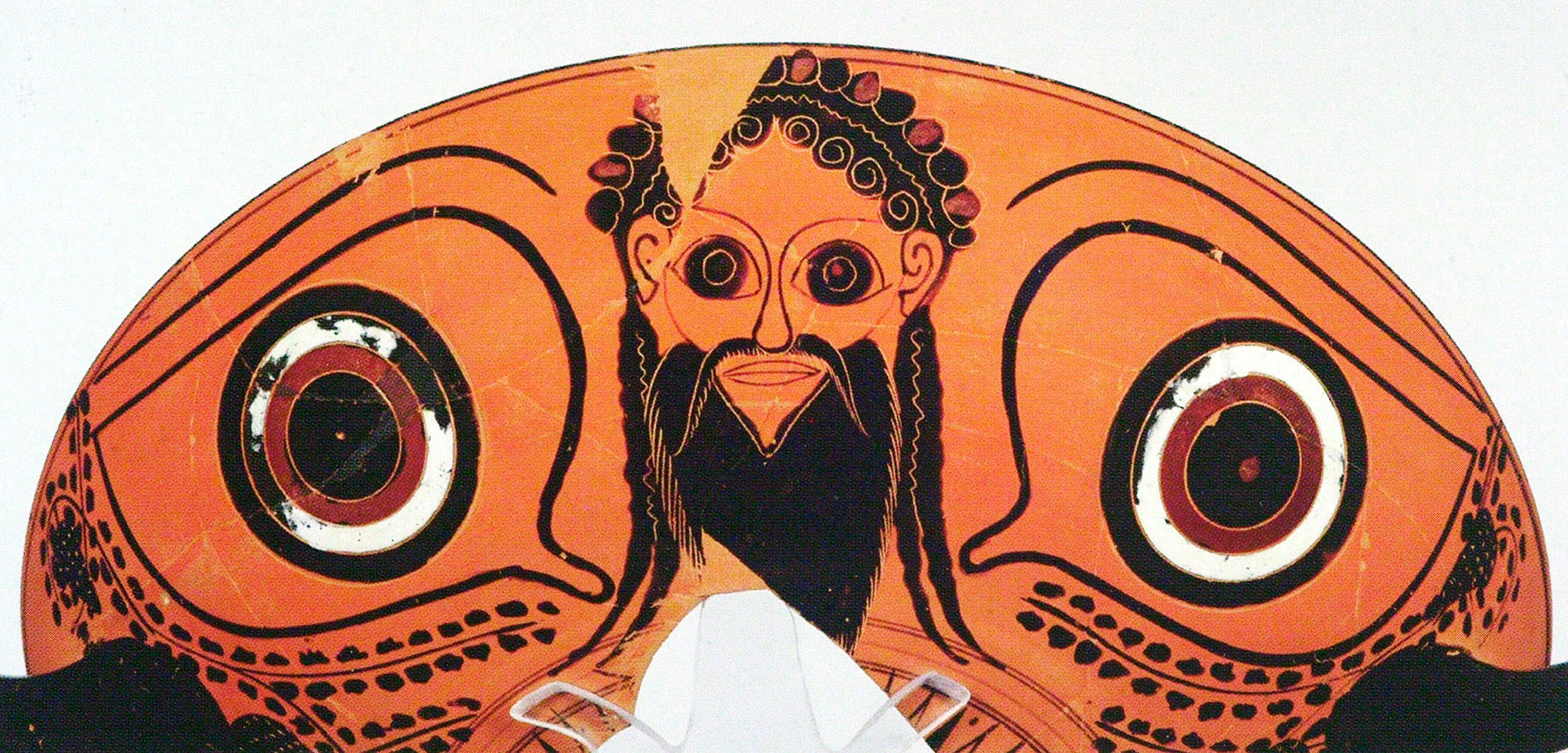
Wann? 07. März 2024
Wohin? Staatliche Antikensammlungen München
Thema? Attische schwarz- und rotfigurige Keramik
Voranmeldung auf GRIPS bis zum 28. Januar 2024
This advanced seminar looks into what makes texts “texts” and how they work — linguistically, stylistically, narratively, and socially. We will investigate how textual structures (cohesion, coherence), stylistic choices, and narrative forms construct meaning within and across genres. At the same time, we will look at how texts reflect, reinforce, or challenge social ideologies (power, gender, race, etc.). We will cover such key aspects of the discipline as Speech Act Theory, Thematic Progression, Text Typology and Genre Theory, Macro-structures and Macro-rules, Intertextuality, and more.
Students will engage in close analysis of a wide range of authentic texts — from political speeches and media articles to recipes and public instructions. We will focus on how language operates across different registers, genres, and communicative contexts. By the end of the course, students will be equipped to perform nuanced stylistic and functional analyses of texts, with applications ranging from literary studies and media criticism to professional and academic writing.
 Die Veranstaltung möchte auf einer vorwiegend literaturgeschichtlichen
Basis in die Analyse dramatischer, lyrischer und narrativer Texte
einführen und gleichzeitig einen Grundstein für die praktische Anwendung
der Arbeitstechniken des Fachgebiets Neuere deutsche
Literaturwissenschaft legen.
Die Veranstaltung möchte auf einer vorwiegend literaturgeschichtlichen
Basis in die Analyse dramatischer, lyrischer und narrativer Texte
einführen und gleichzeitig einen Grundstein für die praktische Anwendung
der Arbeitstechniken des Fachgebiets Neuere deutsche
Literaturwissenschaft legen.
Hierfür werden exemplarisch Texte wie eine kleine Auswahl der Grimm’schen Kinder- und Hausmärchen (1812-1857), E.T.A. Hoffmanns Der Sandmann (1816), Georg Büchners Der hessische Landbote (1834), Joseph von Eichendorffs Mondnacht (1837), expressionistische Gedichte (1910-12), Gotthold Ephraim Lessings Miss Sara Sampson (1755), Gerhard Hauptmanns Bahnwärter Thiel (1888) oder auch Franz Kafkas Ein Hungerkünstler (1922)
einer näheren und verschieden akzentuierten Analyse unterzogen. Unter
ebenfalls medialer Einbindung wie beispielsweise der Verwendung von
Annotation Stuio sollen letztlich zentrale Kompetenzen zu Recherche,
Bibliographieren, Zitieren, textnaher Arbeit sowie ein kritischer und
produktiver Umgang mit Forschungsliteratur eingeübt werden.
Die Texte werden auf der Lernplattform GRIPS zur Verfügung gestellt und
sind größtenteils ebenfalls preisgünstig bei Reclam erhältlich.
 Die Veranstaltung möchte auf einer vorwiegend literaturgeschichtlichen
Basis in die Analyse dramatischer, lyrischer und narrativer Texte
einführen und gleichzeitig einen Grundstein für die praktische Anwendung
der Arbeitstechniken des Fachgebiets Neuere deutsche
Literaturwissenschaft legen.
Die Veranstaltung möchte auf einer vorwiegend literaturgeschichtlichen
Basis in die Analyse dramatischer, lyrischer und narrativer Texte
einführen und gleichzeitig einen Grundstein für die praktische Anwendung
der Arbeitstechniken des Fachgebiets Neuere deutsche
Literaturwissenschaft legen.
Hierfür werden exemplarisch Texte wie eine kleine Auswahl der Grimm’schen Kinder- und Hausmärchen (1812-1857), E.T.A. Hoffmanns Der Sandmann (1816), Georg Büchners Der hessische Landbote (1834), Joseph von Eichendorffs Mondnacht (1837), expressionistische Gedichte (1910-12), Gotthold Ephraim Lessings Miss Sara Sampson (1755), Gerhard Hauptmanns Bahnwärter Thiel (1888) oder auch Franz Kafkas Ein Hungerkünstler (1922)
einer näheren und verschieden akzentuierten Analyse unterzogen. Unter
ebenfalls medialer Einbindung wie beispielsweise der Verwendung von
Annotation Stuio sollen letztlich zentrale Kompetenzen zu Recherche,
Bibliographieren, Zitieren, textnaher Arbeit sowie ein kritischer und
produktiver Umgang mit Forschungsliteratur eingeübt werden.
Die Texte werden auf der Lernplattform GRIPS zur Verfügung gestellt und
sind größtenteils ebenfalls preisgünstig bei Reclam erhältlich.
 Textanalyse WiSe 2023/24
Donnerstagskurs
Die Veranstaltung möchte auf einer vorwiegend literaturgeschichtlichen Basis in die Analyse dramatischer, lyrischer und narrativer Texte einführen und gleichzeitig einen Grundstein für die praktische Anwendung der Arbeitstechniken des Fachgebiets Neuere deutsche Literaturwissenschaft legen.
Hierfür werden exemplarisch Texte wie eine kleine Auswahl der Grimm’schen Kinder- und Hausmärchen (1812-1857), E.T.A. Hoffmanns Der Sandmann (1817), Georg Büchners Der hessische Landbote (1834), Josph von Eichendorffs Mondnacht (1837), expressionistische Gedichte (1910-12), Gotthold Ephraim Lessings Miss Sara Sampson (1755), Gerhard Hauptmanns Bahnwärter Thiel (1888) oder auch Franz Kafkas Ein Hungerkünstler (1922) einer näheren und verschieden akzentuierten Analyse unterzogen. Unter ebenfalls medialer Einbindung sollen letztlich zentrale Kompetenzen zu Recherche, Bibliographieren, Zitieren, textnaher Arbeit sowie ein kritischer und produktiver Umgang mit Forschungsliteratur eingeübt werden.
Die Texte werden auf der Lernplattform GRIPS zur Verfügung gestellt und sind größtenteils ebenfalls preisgünstig bei Reclam erhältlich.
 Textanalyse WiSe 2023/24
Mittwochskurs
Die Veranstaltung möchte auf einer vorwiegend literaturgeschichtlichen Basis in die Analyse dramatischer, lyrischer und narrativer Texte einführen und gleichzeitig einen Grundstein für die praktische Anwendung der Arbeitstechniken des Fachgebiets Neuere deutsche Literaturwissenschaft legen.
Hierfür werden exemplarisch Texte wie eine kleine Auswahl der Grimm’schen Kinder- und Hausmärchen (1812-1857), E.T.A. Hoffmanns Der Sandmann (1817), Georg Büchners Der hessische Landbote (1834), Josph von Eichendorffs Mondnacht (1837), expressionistische Gedichte (1910-12), Gotthold Ephraim Lessings Miss Sara Sampson (1755), Gerhard Hauptmanns Bahnwärter Thiel (1888) oder auch Franz Kafkas Ein Hungerkünstler (1922) einer näheren und verschieden akzentuierten Analyse unterzogen. Unter ebenfalls medialer Einbindung sollen letztlich zentrale Kompetenzen zu Recherche, Bibliographieren, Zitieren, textnaher Arbeit sowie ein kritischer und produktiver Umgang mit Forschungsliteratur eingeübt werden.
Die Texte werden auf der Lernplattform GRIPS zur Verfügung gestellt und
sind größtenteils ebenfalls preisgünstig bei Reclam erhältlich.

Dienstagskurs (16-18 Uhr c.t.)
Die Veranstaltung möchte auf einer vorwiegend literaturgeschichtlichen Basis in die Analyse dramatischer, lyrischer und narrativer Texte einführen und gleichzeitig einen Grundstein für die praktische Anwendung der Arbeitstechniken des Fachgebiets Neuere deutsche Literaturwissenschaft legen.
Hierfür werden exemplarisch Texte wie eine kleine Auswahl der Grimm’schen Kinder- und Hausmärchen (1812-1857), E.T.A. Hoffmanns Der Sandmann (1817), Georg Büchners Der hessische Landbote (1834), Joseph von Eichendorffs Mondnacht (1837), expressionistische Gedichte (1910-12), Gotthold Ephraim Lessings Miss Sara Sampson (1755), Gerhard Hauptmanns Bahnwärter Thiel (1888) oder auch Franz Kafkas Ein Hungerkünstler (1922) einer näheren und verschieden akzentuierten Analyse unterzogen. Unter ebenfalls medialer Einbindung sollen letztlich zentrale Kompetenzen zu Recherche, Bibliographieren, Zitieren, textnaher Arbeit sowie ein kritischer und produktiver Umgang mit Forschungsliteratur eingeübt werden.
Die Texte werden auf der Lernplattform GRIPS zur Verfügung gestellt und sind größtenteils ebenfalls preisgünstig bei Reclam erhältlich.
Wie verschlüsselt ein literarischer Text seine Botschaften und seine poetische Wirkung, wenn er sich vor Ideologisierung, Politisierung oder Zensur verbergen oder abgrenzen möchte? In Osteuropa galt dies als wichtige intellektuelle Überlebensfrage während des Kalten Krieges. Im Seminar werden wir verschiedene Lösungen besprechen, die rumänische, rumäniendeutsche und jüdische Schriftsteller gefunden haben, um ihre Ansichten über das Individuum in der Gesellschaft und über die Rolle der Kultur und des Künstlers in Auseinandersetzung mit einer offiziellen Kulturideologie in Rumänien (1948-1989) darzustellen. Gelesen und besprochen werden u.a. Herta Müller, Mircea Cartarescu und Norman Manea. Die ausgewählten Werke wurden häufig entweder dokumentarisch als Einblick in den Alltag oder poetisch als ästhetischer Rückzug ins Private interpretiert. Das Seminar möchte darüber hinaus auf nicht ausgedrückte Ebenen der Lektüre, auf kontextspezifische Inhalte und Ausdrucksformen, und auf verschiedene Funktionen der Ästhetik jenseits der Vermittlung oder der Steigerung von Emotionen aufmerksam machen. Wir werden uns neben einer Lektüre im Hinblick auf den Entstehungskontext u.a. auch der Frage widmen, inwiefern diese Texte jenseits ihres ursprünglichen Raumes und ihres ursprünglichen Zielpublikums den heutigen Leser noch ansprechen. Rumänisch-Kenntnisse, Faktenwissen zur historisch-gesellschaftlichen Konstellation des ehemaligen Ostblocks und Kenntnisse über die Arbeitsmethoden der Literaturwissenschaft sind nicht notwendig, aber von Vorteil.
The Black Lives Matter Movement:
Performing Embodied Protest, Staging Spatial Choreographies
Starting as a form of hashtag activism in response to the shooting of 17-year-old African American teenager Trayvon Martin in 2012 and the acquittal of his murderer, the slogan “Black Lives Matter” has come to designate the guiding principles of a global social and political movement committed to the fight against police brutality, racial and ethnic disparities in the US criminal justice system, the prison industrial complex, and systemic racism.
Drawing on theoretical concepts, methodology, and critical lenses of
performance studies (e.g., McKenzy, Schechner, Taylor), we will use this
seminar to explore the repertoire of protest tactics employed by BLM
activists with a special focus on 1) their use and conception of the
body, 2), their performance of spatial choreographies and appropriation
of public space, 3) the role of collectivity, and 4) their embodiment of
collective memory and enactment of ritual. We will discuss the
significance of new tactics of resistance identified with the BLM
movement on the one hand and established action practices derived from
other activist movements (e.g., AIDS, anti-war, or environmental
activism) and longer traditions of protest (e.g., the Civil Rights and
Black Power Movements) on the other hand. Acknowledging the
transnational character of the movement, we will attend to the cultural
specificity of expressions of resistance and solidarity and, by
implication, their adaptation in different cultural contexts.
The
central aim of the seminar is to highlight the social, cultural,
political and epistemological impact of embodied protest.
This seminar closely examines the relationship between health, health care and conceptions of the body in Eastern Europe in the 20th century from a social historical perspective. We aim to study how multiethnic empires, nation states, dictatorships and state socialist states thought about and treated the health of their populations. We will particularly focus on the role of body perceptions in the (re-)making and professionalization of public health and welfare systems. While primarily focusing on Eastern Europe, the course will approach the regional health models, practices and developments in an all-European comparative and global context. By means of a number of national case studies, we examine forms of inclusion and exclusion these mechanisms embedded, including gender, sexuality and ethnicity-based hierarchies and differentiation. Some of the specific topics this course covers are the politics of reproduction, children’s and mother’s bodies and welfare, dismemberment and disability, eugenics, and the relationship between local and international representatives of health care. Students will become acquainted with recent, international and comparative literature related to the history of health care in Eastern Europe in the 20th century. In this course students will gain a practical insight into the Anglo-American style of graduate seminars and will practice and expand their English reading, writing and presentation skills. Students will also learn to apply critical analysis to the material covered in the course and demonstrate their ability to make original arguments with appropriate support and analysis in their written work.
This proseminar offers an overview of the ways in which different Roma communities across Eastern Europe experienced the Nazi genocide and German occupation. This includes forced labor, deportations to concentration camps and the Holocaust by bullets. We will not only address the question “How did people die?” but look at the strategies initiated by individuals and groups to survive the Nazi persecution, such as going into hiding and joining resistance movements. In the second part of the course, we will focus on the issues of memory and recognition, exploring the variety of forms that the (non-)commemoration of Romani genocide has taken since the communist era. For these purposes, we will follow the transformation of the sites of memory of Roma in Poland and the former Soviet Union. The course will include a visit to the Memorium Nuremberg Trials.
In this seminar, students will learn about the “The German Economy” by writing and presenting a paper on a policy relevant topic and by giving feedback to fellow student’s papers and presentations. Analysis will be based on introductory economics, reports by national and international organisations and scientific papers.
Topics cover a broad range and include, for example, the impact of the relatively new and recently raised minimum wage, the desirability of the imminent return of public finances to the rules of the debt brake (“Schuldenbremse”), and the merits of the recently introduced national emission trading system (“nationale Emissionshandelsstelle“, nEHS).
This course examines the history of international relations within the "Greater Central Asia" region, encompassing the five post-Soviet Republics, Afghanistan, Transcaucasia, Mongolia, and peripheral territories of contemporary Iran, China, and Russia. Historically, this dynamic region connected Europe, the Middle East, and Asia through conquest, migration, trade, and cultural exchange. From the mid-17th century, it became increasingly contested by the Great Asian Empires of the Modern Era and the expanding Russian Empire. The curriculum focuses on the 19th-century "Great Game" - the imperial rivalry between the British and Russian Empires for regional influence, while highlighting the role of translocal actors in geohistorical dynamics.
Although Central Asia fell under near-total Russian hegemony from the late 19th century, the disintegration of the USSR transformed the region into a focal point for renewed geopolitical and geoeconomic competition. This modern rivalry involves not only nation-states but also regional alliances, financial institutions, transnational corporations (TNCs), NGOs, criminal groupings and other. While the hydrocarbon reserves of the Caspian Sea dominated the agenda in the 1990s, the current post-2022 geopolitical landscape, characterized by climate change and shifting energy policies, has brought renewed international attention to the region. Crucially, this is occurring alongside a more pronounced assertion of regional identity. The course will analyze China’s Belt and Road Initiative, the Shanghai Cooperation Organisation, the Russian-backed Eurasian Economic Union, and the European Union’s evolving strategic approach to the region.
Students are required to carefully read the recommended literature on a weekly basis, while communicating regularly with the lecturer (who will provide concrete assignments with questions for the reading). They are expected to participate actively in seminar discussions, giving a 10-minute presentation and acting as discussants for other students' presentations. After all the seminars have taken place, students should write a six-page essay on the topic of their presentation and submit it by the end of the semester.
The ILO is the most important actor in the creation of international labor standards and conventions on labour and social policy. As a (formally autonomous) sub-secretariat of the League of Nations, it was founded in Geneva in 1919. Labour conventions were (and are) adopted by the annual International Labour Conferences, a body composed of national delegations meeting on a tripartite basis (i.e., government experts, trade unionists, and employers). These conventions had to be adopted by national governments and implemented in workplaces, social institutions and elsewhere. The given processes of knowledge sharing, pooling of interests, and standard setting at the national and international levels are an excellent example of Area Studies. In this course, we will study primary sources and secondary literature to identify key areas of ILO influence on labour and social policy in 20th century Europe. Based on this research, we will then plan and create three blended learning units to be published online as part of an interdisciplinary Area Studies initiative at UR.
In the past few decades, working with big data and the tools developed in the digital humanities have transformed the ways in which historical research is conducted. The transition from the pen-and-paper scholarship to digital-based research has helped solve a great number of questions or even to overturn certain theories. One of the areas where these advances are most visible is the history of the family, a rich field where demographers, historians, and anthropologists have been collaborating for more than half a century.
This seminar will offer a bird’s-eye view of some of the main issues of family history at a time when the family underwent profound changes and, in turn, contributed to the shaping of society and the state. We will cover such issues as the interactions between family and political activity, the enduring importance of family ties in economic enterprise, and parents’ changing strategies of transmitting well-being to their children. Moreover, we will permanently come into contact with the most recent digital humanities or big data projects that have transformed the history of the family. A heavy emphasis will be laid on working with the various population and family history databases developed during the past two decades in various regions of Europe.
As a result of this seminar, students will be able to identify and reflect on the main debates and topics in family history between 1600 and 1900, and will obtain a grasp of the central approaches towards this institution in social history, historical demography and the digital humanities.
Recommended readings:
David I. Kertzer and Mario Barbagli, The History of the European Family. Vol. I: Family Life in Early Modern Times, 1500 – 1789. Yale University Press, 2001 and Vol. II: Family Life in the Long Nineteenth Century, 1789 – 1913. Yale University Press, 2003.
Peter Laslett, Richard Wall. Household and Family in Past Time. Cambridge University Press, 1972 (Introductory chapter).
Charles Tilly. “Family history, social history, and social change”. Journal of Family History 12 (1-3) 1987: 319-330.
Kristen Nawrotzki and Jack Dougherty. Writing History in the Digital Age. University of Michigan Press, 2013. [accessible online at http://www.digitalculture.org/books/writing-history-in-the-digital-age/]
Richard Wall. “Leaving Home and Living Alone: An Historical Perspective”. Population Studies 43 (1989): 369-389.
Richard Woods. “Dig Montaigne Love His Children? Demography and the Hypothesis of Parental Indifference.” Journal of Interdisciplinary History 33/3 (Winter 2003): 421 – 442.
In the wake of the present-day geopolitical reorientation and security distortions, the resource markets, including energy, are shifting. The competition for exploiting them spirals, yet it resembles the exploitation patterns in the twentieth century. This course studies how oil and natural gas markets emerged, paralleling decolonisation, revitalisied after WWII and boomed from the 1950s, going through crisis in the 1970s and the glut in the 1980s. At the course, we will discuss how the end of the Cold War impacted the resource development scenario for post-Soviet Republics. We will discuss the share of hydrocarbons in the world energy system, the status quo of the knowledge of exploration and estimation of the amounts of hydrocarbons, the production costs in various countries and the mechanisms of global price regulation. We will particularly focus on how oil and natural gas production reflects global inequalities and international relations of exporting and importing states and how political and economic elites consolidate their rule from the oil rent and use the oil factor in diplomacy.
We will study the particularities of the national and transnational oil and natural gas corporations in the Middle East, Asia, Russia and the OECD countries, considering the role of the state in the oil and natural gas sector in different states. The politics around transport corridors, legal regimes, monopolies and embargoes will be highlighted. Not the least we will consider environmental effects and green policies’ impacts on global oil and natural gas production and consumption. The course will shed light on the politics of energy reports and prognoses.
The students are required to read the recommended literature carefully and actively participate in the Seminar discussions. Students are also expected to make a 10-minute presentation and write a 6-pages essay on the topic of their choice.
This seminar investigates the complex relationship between notions of "home" and the "uncanny" as represented in films, television series, and computer games. Drawing on key theoretical texts by thinkers such as Jacques Lacan, Tzvetan Todorov, Masahiro Mori, Julia Kristeva, Judith Butler, Souvik Mukherjee, and Slavoj Žižek, we will critically explore how media artifacts construct, deconstruct, and challenge our understanding of home as both a physical and symbolic space.
We will address questions such as: What constitutes a "virtual home"? When and how does the familiar become strange—or the comfortable turn uncomfortable? How do media forms engage with liminal spaces, evoking psychological, existential, or symbolic experiences of the uncanny?
By analyzing selected case studies across different cultures and media forms, students will gain a deeper understanding of how "home" and "unhomeliness" are negotiated in contemporary storytelling. The seminar invites interdisciplinary perspectives, combining media theory, cultural studies, psychoanalysis, and game studies.
Let M be a compact connected smooth manifold without boundary. One of the guiding questions of the lecture is whether there is a Riemannian metric g on M, such that g has everywhere positive scalar curvature. We will shortly call such a metric a psc (positive scalar curvature) metric.
The question actually splitts into two parts:
1.) Obstructions against psc metrics, in other words: reasons why such metrics cannot exist
2.) Constructions of psc metrics on large classes of manifolds
A large part of the lecture will study the first part: The Atiyah-Singer index theorem is the most important obstruction against psc metrics. The theorem has attracted a lot of interest within mathematics, because it has connected many fields in mathematics: geometry, topology, and partial differential equations. It also established many links to applications in mathematical physics. For example it provides important tools for a better understanding of scalar curvature in general relativity, leading e.g. to Witten's proof of the positive mass theorem of an asymptotically Euclidean spacetime (e.g. a star or a black hole). The index theorem has attracted many important prizes, e.g. the Fields Medal for Atiyah in 1966 and the Abel prize for Atiyah and Singer in 2004. The Atiyah-Singer index theorem states that the Fredholm index of an elliptic partial differential operator D on M is equal to a characteristic class of the tangent bundle of M, integrated over M. In the classical case, D is the Dirac operator and if M carries a psc metric, then this Fredholm index is 0. On the other hand, characteristic classes are easy to calculate, they do not depend on the choice of a Riemannian metric, and often we see that they are not zero. As a consequence we get manifolds that do not carry a psc metric. The Atiyah-Singer theorem also applies to other types of elliptic operators. One special case is the Gaus-Bonnet-Chern operator which yields a higher-dimensional version of the Gauss-Bonnet formula, and in another version we obtain as an index the signature that some people in the audience might have seen in a topology course. We want to follow the heat-kernel method to prove the index theorem. This approach is considerably simpler that the original approach by Atiyah and Singer, and allows us to understand the proof in many details. If time permits we will then study the second part of the question and we will use surgery methods to construct many metrics of positive scalar curvature.
A good a impression about the course can be obtained from the book(s) by Roe or the lecture notes cited on the web page.
This seminar will be co-taught with Dr. Gao Shan, Assistant Professor of Journalism and Communication Studies at the Minzu University of China (Beijing). Gao Shan is an expert in intercultural media studies and his recent work explores the possibilities of human-nature relations enabled by media technologies in the Chinese context.
The seminar explores the differences and commonalities in how the nature-technology dichotomy is thought between East and West and reflects on its depiction in literature and film, as well as its theorization in philosophy and history. In this seminar students will learn to understand the theoretical challenge of the distinction between nature and technics and its cultural embeddedness, and acquire the capacity to navigate the challenges of bridging theoretical systems that rest on divergent cultural presuppositions. Furthermore, they will learn to analyse the medial representations of nature/technics in terms of these theories and to reflect on the productivity and limits of these categories in their analyses.
Examination: Presentation & term paper (Hausarbeit) (due by 30.09.2026) The term paper (Hausarbeit) may be written in German or English.
FlexNow-An- und Abmeldung: 27.07. - 29.09.2026
GRIPS (v4.5.x) wird von der Campus IT der Universität Regensburg betrieben. | Datenschutz | Kontakt | Impressum