
Begleitveranstaltung zum studienbegleitenden Praktikum
- Trainer/in: Anita Schilcher
Kursbereich: Schilcher
Begleitveranstaltung zum studienbegleitenden Praktikum
Hier tragen Sie die Kursbeschreibung ein.
PD Dr. Manuel Trummer
Kulturerbe Kirchweih?
Empirisches Forschungsseminar zu Strukturen, Praxen und Akteuren im Landkreis Amberg-Sulzbach
Seminar: Mi, 10–12
System: Zoom + GRIPS + eigene Interviews
Kirchweihfeste – oder besser: Kirwa-Feste – zählen zu den wichtigsten Brauchereignissen im Jahreslauf Ostbayern. Allein im Landkreis Amberg-Sulzbach finden zwischen April und Oktober über 200 Kirwa-Feste statt, organisiert von Vereinen, aber auch losen Organisationsgemeinschaften, bestehend aus Jugendlichen und jungen Frauen und Männern. Gerade in den Dörfern und Kleinstädten bildet die jährliche Kirwa das zentrale öffentliche Fest des Jahres, an dem sich nicht nur lokales Selbstbewusstsein festmacht, sondern auch eine ganze Reihe ökonomischer Benefits, von denen von der Metzgerei bis zum Friseursalon häufig die gesamte dörfliche Wirtschaft profitiert. Mit ihren Ritualen, ihren Erzählungen, ihrer Kreativität und ihren meist als „traditionell“ apostrophierten Strukturen und Ikonographien bildet die Kirwa ein ethnographisches Forschungsfeld par excellence.
In Kooperation mit dem Landratsamt Amberg-Sulzbach dokumentiert das Seminar die aktuelle Kirwa-Szene im Landkreis. Dazu setzen wir einerseits auf Literaturrecherche, aber andererseits vor allem auf Experteninterviews und narrative Interviews mit Akteurinnen und Akteuren. Dabei orientiert sich das Seminar vor allem an den Terminologien und Regularien der UNESCO zum Thema Immaterielles Kulturerbe. Ziel ist es, eine Diskussion über Kirwa als immaterielles Kulturerbe und als „Kandidat“ für das bayerische Landesverzeichnis zu führen.
Die TeilnehmerInnen des Seminars erwerben grundlegende ethnographische Kompetenzen, im besonderen im Bereich Interview und qualitative Inhaltsanalyse. Sie eignen sich zudem theoretisches und praktisches Wissen im Bereich immaterielles Kulturerbe an und verfügen nach Abschluss des Seminars über die Fähigkeit, selbständig kleinere ethnographische Projekte zu leiten und kritisch mit Fragen des immateriellen Erbes umzugehen.
Grundlegende Literatur
Hemme, Dorothee/Tauschek, Markus/Bendix, Regina: Prädikat „Heritage“: Wertschöpfungen aus kulturellen Ressourcen; Berlin 2007 (Studien zur Kulturanthropologie/Europäischen Ethnologie 1).
Piehler, Uli: Mir hom Kirwa! Kirchweihfreuden in der Oberpfalz; o. O. 2009.
Tauschek, Markus: Kulturerbe: eine Einführung; Berlin 2013.
Tauschek, Markus: Wertschöpfung aus Tradition: der Karneval von Binche und die Konstituierung kulturellen Erbes; Berlin 2010.
Zimmermann, Harm-Peer: „sich eine Vergangenheit geben, aus der man stammen möchte“. Zur Kritik der Heritage-Kritik; in: Schneider, Ingo/Flor, Valeska (Hgg.): Erzählungen als kulturelles Erbe: das kulturelle Erbe als Erzählung (= Beiträge der 6. Tagung der Kommission für Erzählforschung in der Deutschen Gesellschaft für Volkskunde vom 1.-4. September 2010 im Universitätszentrum Obergurgl), Münster 2014 (Innsbrucker Schriften zur Europäischen Ethnologie und Kulturanalyse 2), S. 47–62.
Sprache ist zentraler Gegenstand und Medium von Bildung (vgl. Feilke 2012). Doch wie funktioniert Sprache eigentlich in unserem Kopf? Was bedeutet es, keine hohen Kompetenzen im sprachlichen Bereich zu haben? Schon diese beiden Fragen zeigen, dass verschiedene Disziplinen (hier z. B. Kognitive Linguistik, Bildungsforschung etc.) unterschiedliche Fragestellungen und Forschungsinteressen verfolgen, wenn sie sich mit Sprachkompetenz auseinandersetzen.
Aufgabe der Schule ist es, Sprachkompetenz zu fördern und Kinder in die literale Praxis unserer Kultur einzuführen. Durch die Konfrontation mit der Schriftsprache verändert sich auch die Wahrnehmung von Sprache: Varietäten treten beispielsweise stärker ins Bewusstsein, etwa der Unterschied zwischen mündlicher und schriftlicher Sprache oder zwischen Standard- und Umgangssprache. Zunehmend kommt es zu einer Ausdifferenzierung der bereits erworbenen sprachlichen Kompetenzen der Schülerinnen und Schüler, so dass sie zunehmend funktions- und situationsbezogen angewendet werden können. Je nach Ausgangsbedingungen ist dieser Weg für Schüler und Schülerinnen unterschiedlich schwer, deshalb müssen Lehrkräfte gerade im Bereich der Sprachreflexion (Grammatik) sowie in der Mündlichkeit (Sprechen und Zuhören) über entsprechendes Wissen und hohe diagnostische Kompetenzen verfügen, um Kinder und Jugendliche individuell in ihrer sprachlichen Entwicklung unterstützen zu können.
Zuschreibungen wie „Pictorial Turn“ oder „Iconic Turn“ diagnostizieren seit den 1990er-Jahren einen grundlegenden Bedeutungswandel visueller Medien in den Alltagen breiter Bevölkerungsteile. Damit verbindet sich nicht lediglich die Feststellung einer redensartlichen „Bilderflut“ in Folge der Entwicklung neuer Medien, etwa Internet oder Fernsehen, sondern vor allem ein sich verändernder Umgang mit Bildern. Fotos, Filme, Computerspiele, Grafiken prägen und verändern unsere Kultur und tragen zu Kulturkontakten und Kulturkonflikten, zu Globalisierungs- und Regionalisierungsprozessen maßgeblich bei. Innerhalb der kulturwissenschaftlichen Alltagserforschung stellen Bilder sowohl wichtige Quellen zu historischen und gegenwärtigen Lebenswelten dar, als auch Medien, um die sich Kulturen und Fanszenen formieren – etwa im Fall von Comics.
Das Seminar spannt einen Bogen von aktuellen bildtheoretischen Konzepten über historische Bildkulturen seit dem 16. Jahrhundert bis hin zur aktuellen digitalen Visual Culture.
Die Seminarteilnehmer eignen sich Wissen über die Theorie und Methodologie visueller Kulturanthropologie an. Anhand praktischer Beispiele aus Gegenwart und Vergangenheit erwerben sie grundlegende Kompetenzen für die Forschung mit Bildern und Erforschung von Bildern und lernen, diese selbständig im Rahmen eigener künftiger Forschungsvorhaben anzuwenden.
The English language has a strong and growing presence in Asia. From the language of the colonial power to the language of national self-identification after independence, English now exists in various forms and in various sociolinguistic settings that make its presence in Asia particularly fascinating. The seminar will introduce students to the language political climate in countries as diverse as, among others, Singapore, India, China, and the Philippines, countries in which English ranges in function from a native and official language to an auxiliary administrative language or to a language largely confined to the tourism industry. A comparison of the linguistic forms of these varieties will enable a larger-scale picture to emerge, outlining the shape and role of English in this increasingly important part of the world. Students will learn to: develop an understanding of the varieties of English spoken in Asia; linguistic features and sociolinguistic settings that differentiate national and sub-national varieties; how these varieties interact at the (supra-)regional level; situate them within the larger theoretical framework of world Englishes.
The ability to identify the meaning-distinguishing sound types (phonemes) of the language is a minimum requirement for anyone concerned with English. Advanced learners, however, will need a conscious knowledge of distributions, distinctive features and articulatory processes in order to better monitor their own pronunciation, assess regional and social variation and efficiently correct the inevitable Bavarianisms of future pupils. This course will, once more, introduce the set of symbols and the conventions relevant to all types of linguistic exams and practise British and American Standard transcription on authentic material of increasing complexity. Since this course is primarily intended for students of the Lehramt Gymnasium, they will be given priority when registering. Admission is further restricted to owners of at least one pronunciation dictionary (e. g. D. Jones, English Pronouncing Dictionary, Cambridge; J. C. Wells, Longman Pronunciation Dictionary, Pearson).
The ability to identify the meaning-distinguishing sound types (phonemes) of the language is a minimum requirement for anyone concerned with English. Advanced learners, however, will need a conscious knowledge of distributions, distinctive features and articulatory processes in order to better monitor their own pronunciation, assess regional and social variation and efficiently correct the inevitable Bavarianisms of future pupils. This course will, once more, introduce the set of symbols and the conventions relevant to all types of linguistic exams and practise British and American Standard transcription on authentic material of increasing complexity. Since this course is primarily intended for students of the Lehramt Gymnasium, they will be given priority when registering. Admission is further restricted to owners of at least one pronunciation dictionary (e. g. D. Jones, English Pronouncing Dictionary, Cambridge; J. C. Wells, Longman Pronunciation Dictionary, Pearson).
This course forms part of the Master’s Programme in English Linguistics, but students in their Profilmodule are equally welcome to acquire credit points and linguistic expertise. It is intended to provide first-hand experience and critical discussion of seminal works of 20th century linguistic theory and methodology, covering the classical texts of different schools of modern linguistics as well as more recent studies relevant to the ongoing research at our Department.
The research colloquium is open to all students with an interest in linguistics. It offers a discussion forum for topics, methodologies and approaches to linguistic research. It is primarily aimed at advanced students preparing their BA, MA or Staatsexamen theses, but less advanced students wishing to present their ideas and/or research are always welcome. Ongoing and/or planned work can be presented in a class and gives those students a chance to gain valuable feedback in an encouraging environment. Of course, you will also gain insights into the different types of and approaches to the study of the English language here in Regensburg, as staff and doctoral students also present their research in this context. Furthermore, students who have completed their internship will briefly report in this class.
The aim of this lecture is to investigate the way in which the English language is used in conjunction with other languages. There will be a diachronic element, looking at pre-existing languages (British, Pictish, North American native languages, etc.) and their influence, if any, on past and modern English. A more synchronic approach will be taken in contemporary descriptions of places where English is used as an additional (sometimes auxiliary, sometimes main) language. Places investigated will include Wales, Scotland, the Canadian west coast, Australia, East and Southeast Asia, and others.
Description
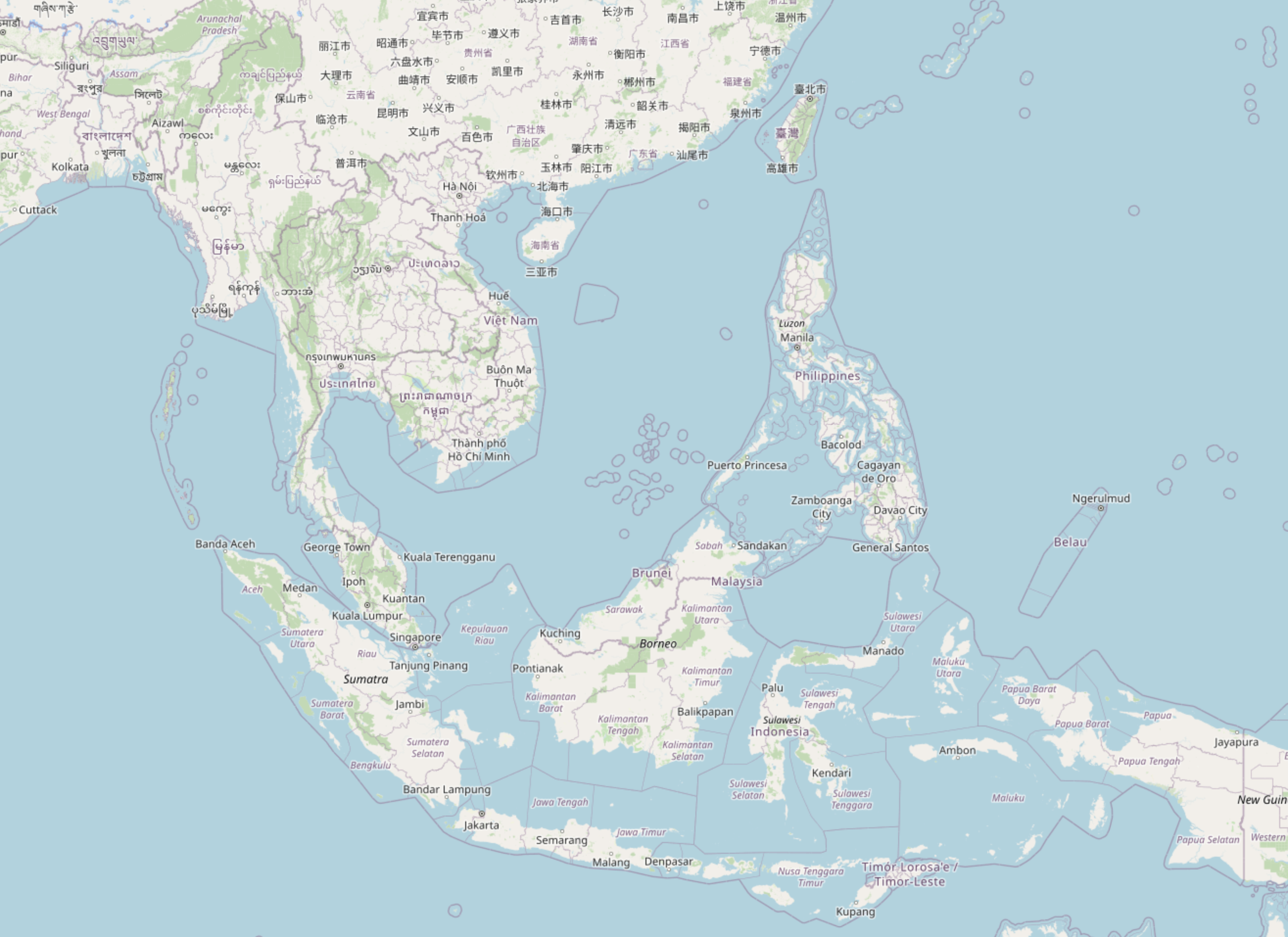
This seminar looks at English and the other languages found in southeast Asian nations, with particular focus on Singapore, Malaysia, and the Philippines. The primary focus will be on sociolinguistic aspects: multilingualism, language policies, language attitudes and domains of use will be considered, much like the various indexical roles of varieties of English. Current theoretical approaches in sociolinguistics will inform our reading of local case studies. Structural linguistic elements characterising individual varieties will also be covered, whereas the way in which they index various social meanings will be the primary aim of individual case studies.
Objectives
Students will be exposed to current theoretical trends in sociolinguistics and World Englishes research. They will develop a close understanding of the sociolinguistic situation in Southeast Asia. Further, they will learn to critically engage with SEA linguistic data through hands-on experience in the form of geographically and socially defined case studies.

Language serves as both a vehicle for oppression and a tool for resistance. In this course, we will explore the intersections of linguistics, oppression, liberation and identity. We will build upon key concepts from Critical Applied Linguistics (Pennycook 2021) in order to examine how English(es) can perpetuate or challenge systems of power and oppression.
Some topics students are invited to explore and engage with include (but are not limited to):
General Requirements:
Requirements for MA students:
In addition to the general requirements, MA students will work on:
Recommended reading:
Pennycook, Alastair. 2021. Chapter 1: Introducing Critical Applied Linguistics. In Critical applied linguistics: A critical re-introduction. Routledge.
Currently, there are numerous varieties of the English language spoken worldwide. Among them, British and American English stand out due to America’s and Britain’s historical colonial influence, their global economic and cultural dominance, and the widespread use of these varieties in media and international communication, being widely favored by foreign learners and English teachers.
Despite ultimately originating from the same linguistic roots, these varieties exhibit significant differences across various aspects such as phonology, vocabulary, grammar, spelling, punctuation, and pragmatics. This course will explore these distinctions, exploring not only the standard norms but also some non-standard features of these varieties.
General Requirements:
In addition to the general requirements, MA students will work on:
This course is part of the Master’s Programme in English Linguistics and restricted to students from that course. It is intended to provide first-hand experience and critical discussion of seminal works of 20th century linguistic theory and methodology, covering the classical texts of different schools of modern linguistics as well as more recent studies relevant to the ongoing research at our Department.
Readings
All readings are compulsory and will be made available on GRIPS.
Requirements
Two oral presentations
Handout (max. 2 pages)
Preparation and participation
Essay on one of the readings (2,000 words to be submitted by 31 August 2024)
This lecture takes a look at the various forms of English found in the British Isles. Geographically, we will cover dialects of England, Wales, Scotland, Ireland, and the Channel Islands. Further, time will be devoted to the analysis of social and ethnic varieties of contemporary Britain. Apart from case studies dealing with selected varieties, the lecture will also touch on the issue of dialectology and sociolinguistics more generally, shining a light on the history and the present-day research methods in the field. Students will: broaden their understanding of geographical and social variation in native English, learn theoretical and methodological concepts in dialectology and sociolinguistics, learn how to engage with dialectal data from a descriptive linguistic vantage point.
The password for the GRIPS workspace will be communicated in class.
Phonetics and phonology is the study of human speech sounds. This introductory lecture builds on ‘Introduction to English linguistics: Theory and structure’ and together with it and ‘Introduction to English linguistics: English in use’, covers the core curriculum in English linguistics.
The lecture will consider the various types of phonetics, their difference to phonology, the working of the human speech apparatus, and the rules according to which languages combine sounds to form meaningful words. The phonemic system of English will be given particular attention, especially in its RP and GA incarnation, but regional and social variation will also be addressed. The International Phonetic Alphabet (IPA), in particular its application to English, will be taught and exemplified in class.
NB: It is strongly recommended that students attend the ‘Theory and structure’ lecture together with this lecture in their first term, before registering for ‘English in use’ in their second term.
The linguistic landscape is visible, written language in public space. As we move through our daily life, we are constantly exposed to such written language, in shopping streets, around university buildings, in city busses. What seems like a random collection of texts all around us turns out, upon closer inspection, to be highly organised and to follow a number of systematic rules. In this class, we will see examples of multilingual signage from around the world; we will explore the ways in which English has made its way into many of these contexts. The growing body of research into the area will be dealt with in detail. Students will have the chance to collect data of their own and apply the theory to them.
The research colloquium is open to all students with an interest in linguistics. It offers a discussion forum for topics, methodologies and approaches to linguistic research. It is primarily aimed at advanced students preparing their BA, MA or Staatsexamen theses, but less advanced students wishing to present their ideas and/or research are always welcome. Ongoing and/or planned work can be presented in a class and gives those students a chance to gain valuable feedback in an encouraging environment. Of course, you will also gain insights into the different types of and approaches to the study of the English language here in Regensburg, as staff and doctoral students also present their research in this context. Furthermore, students who have completed their internship will briefly report in this class.
Phonetics and phonology is the study of human speech sounds. This introductory lecture builds on ‘Introduction to English linguistics: Theory and structure’ and together with it and ‘Introduction to English linguistics: English in use’, covers the core curriculum in English linguistics.
The lecture will consider the various types of phonetics, their difference to phonology, the working of the human speech apparatus, and the rules according to which languages combine sounds to form meaningful words. The phonemic system of English will be given particular attention, especially in its RP and GA incarnation, but regional and social variation will also be addressed. The International Phonetic Alphabet (IPA), in particular its application to English, will be taught and exemplified in class.
NB: It is strongly recommended that students attend the ‘Theory and structure’ lecture together with this lecture in their first term, before registering for ‘English in use’ in their second term.
This lecture introduces the field of language planning and language policy (LPP) and attempts to cover it in its wide breadth, with specific reference to contexts in which the English language plays an important role. Traditional theoretical approaches, such as the distinction between corpus (language-internal) and status (language-external) planning are given as much prominence as more recent approaches considering the role of language in the globalised ‘post-national’ world. The theory will be complemented by several case studies from political entities around the world, bringing students into contact with a wide range of different ways in which the co-existence of English and other languages is managed.
This seminar considers the English language in contact situations that have resulted in the emergence of new codes, known as pidgins and creoles. The colonial period and its reliance on the slave trade are particularly relevant to this topic. We will see how contact between speakers of different languages has resulted in new codes that are lexically, grammatically, and phonologically distinct from their 'parent' languages. The study of pidgins and creoles has also led to major advances in linguistic theory, which student focus groups will focus on closely.
How to write a successful research proposal.
Master SYNCAT Advanced Synthesis & Catalysis
This course is designed to deepen students’ knowledge of and skills in academic writing, i.e., in conducting and organising advanced linguistic research, in identifying and evaluating sources as well as in summarising and discussing research positions. The focus will be on composing linguistic theses and the individual steps involved in this form of academic writing, from getting started to the final product. We will zoom in on different writing techniques, including stylistic questions as well as formal aspects. By the end of this course, students will be able to (1) evaluate and discuss the structure of scientific texts, (2) apply this knowledge to their own writings, and (3) develop their own research projects.
Course requirements: active participation in class, regular readings, writing assignments (portfolio).
Currently, there are numerous varieties of the English language spoken worldwide. Among them, British and American English stand out due to America’s and Britain’s historical colonial influence, their global economic and cultural dominance, and the widespread use of these varieties in media and international communication, being widely favored by foreign learners and English teachers.
Despite ultimately originating from the same linguistic roots, these varieties exhibit significant differences across various aspects such as phonology, vocabulary, grammar, spelling, punctuation, and pragmatics. This course will explore these distinctions, exploring not only the standard norms but also some non-standard features of these varieties.
General Requirements:
In addition to the general requirements, MA students will work on:
This praxis-oriented course will provide students with an in-depth understanding of the most useful software and tools for science communication in the field of linguistics. We will explore how to make the most out of reference management
software, word processing tools and presentation software in order to create well-formatted papers, engaging presentations, and eye-catching research posters.
Pragmatics is one of the fuzzy big-tent subdisciplines of Linguistics: it is difficult to define in terms of what it is, so it has been defined in terms of what it is not. It deals with meaning, but it is not semantics. It deals with structures, but it is not morphosyntax. It deals with intonation patterns, but it is not phonology. What most linguists would agree on is that pragmatics concerns itself with ways of doing things with words. In this course we are going to take a closer look at which things we can do and which words we use to do them, taking a look at a selection of topics under big-tent pragmatics. This will include, but not be limited to: deixis and reference, speech acts, pragmatic inferences and implicatures, Intonation and meaning, politeness theory, interactional patterns and discourse styles.
General Requirements:
In addition to the general requirements, MA students will work on:
Language is not merely a tool for communication, but a powerful social instrument for constructing and deconstructing our gendered and sexual identities. This course will provide a foundation for exploring the transformative potential of linguistic practices in queering traditional norms and identities. Through the lens of feminist and queer theory, we will critically analyse how different subdisciplines of linguistics have approached the concepts of gender and sexuality in the past decades, opening new avenues for their analysis.
No previous knowledge of feminist or queer theory is required to participate in the course, yet reading Pennycook’s (2021) chapter on the politics of difference in preparation to the course is highly recommended.
General Requirements:
Requirements for MA students:
In addition to the general requirements, MA students will work on:
Recommended reading:
Pennycook, Alastair. 2021. Chapter 4: The politics of difference. In Critical applied linguistics: A critical re-introduction. New York: Routledge. 85-102. (Regensburger Katalog)
Der Begriff der literarischen Kompetenz spielt in der aktuellen fachdidaktischen Diskussion eine wichtige Rolle. Analog zum Begriff der Lesekompetenz wird versucht, Teilkompetenzen zu identifizieren, die sich in einem kontinuierlichen Lernprozess (weiter-)entwickeln lassen, so dass sich auch für Schüler*innen ein deutlicheres Bild davon ergibt, wo sie stehen und wie sie ihren eigenen Lernprozess steuern können. Inzwischen liegen auch etliche empirische Studien vor, die ausleuchten, wie Lesekompetenz und literarische Kompetenz zusammenhängen und sich gegenseitig stützen. Das Seminar thematisiert unterschiedene Teilkompetenzen und Voraussetzungen „literarischer Kompetenz” und zeigt an verschiedenen Beispielen der Allgemeinliteratur, der Kinder- und Jugendliteratur, des Films und der Werbung, wie Schüler transferfähige Fertigkeiten beim Umgang mit Texten erlangen können. Dass sich literarische Kompetenz nicht nur durch textanalytische Zugangsweisen erwerben lässt, sollen Beispiele aus dem gesamten Methodenrepertoire des Literaturunterrichts zeigen. Das Seminar ist Teil des Forschungsprojektes Falke-e, dies hat aber keine Auswirkungen auf den Arbeitsumfang oder die inhaltliche Gestaltung.

This is the GRIPS course for GLCA (General Language Course A) the first of a series of three courses you are required to complete that cover the A -Z of English grammar and ensure you have the basic vocabulary you will need for teaching (or whatever else your heart desires!)
The course sections will be opened week by week, but you will always have access to the weeks we have completed so you can revise any exercises where you have not performed as well as you would have liked.
Der Begriff der literarischen Kompetenz spielt in der aktuellen fachdidaktischen Diskussion eine wichtige Rolle. Analog zum Begriff der Lesekompetenz werden Teilkompetenzen identifiziert, die sich in einem kontinuierlichen Lernprozess (weiter-)entwickeln lassen, so dass sich auch für Schüler:innen ein deutlicheres Bild davon ergibt, wo sie stehen und wie sie ihren eigenen Lernprozess steuern können. Die Vorlesung thematisiert unterschiedene Teilkompetenzen einer „literarischen Kompetenz” und zeigt an verschiedenen Beispielen der Allgemeinliteratur, der Kinder- und Jugendliteratur, des Films und der Werbung, wie Schüler:innen transferfähige Fertigkeiten beim Umgang mit Texten erlangen können. Dass sich literarische Kompetenz nicht nur durch textanalytische Zugangsweisen erwerben lässt, sollen Beispiele aus dem gesamten Methodenrepertoire des Literaturunterrichts zeigen.
The English language has a strong and growing presence in Asia. From the language of the colonial power to the language of national self-identification after independence, English now exists in various forms and in various sociolinguistic settings that make its presence in Asia particularly fascinating. The seminar will introduce students to the language political climate in countries as diverse as, among others, Singapore, India, China, and the Philippines, countries in which English ranges in function from a native and official language to an auxiliary administrative language or to a language largely confined to the tourism industry. A comparison of the linguistic forms of these varieties will enable a larger-scale picture to emerge, outlining the shape and role of English in this increasingly important part of the world. Students will learn to: develop an understanding of the varieties of English spoken in Asia; linguistic features and sociolinguistic settings that differentiate national and sub-national varieties; how these varieties interact at the (supra-)regional level; situate them within the larger theoretical framework of world Englishes.
Phonetics and phonology is the study of human speech sounds. This introductory lecture builds on ‘Introduction to English linguistics: Theory and structure’ and together with it and ‘Introduction to English linguistics: English in use’, covers the core curriculum in English linguistics.
The lecture will consider the various types of phonetics, their difference to phonology, the working of the human speech apparatus, and the rules according to which languages combine sounds to form meaningful words. The phonemic system of English will be given particular attention, especially in its RP and GA incarnation, but regional and social variation will also be addressed. The International Phonetic Alphabet (IPA), in particular its application to English, will be taught and exemplified in class.
NB: It is strongly recommended that students attend the ‘Theory and structure’ lecture together with this lecture in their first term, before registering for ‘English in use’ in their second term.
Welcome to SyLveStER – Synchrone Linguistik im vertieften Staatsexamen (Repetitorium). This course is intended exclusively for candidates to the advanced state exam (vertieft) in English linguistics. We will consider all parts of the synchronic linguistics exam: phonetics and phonology, syntax, text linguistics and stylistics, lexicology, morphology, phraseology, variation and change, language acquisition, lexicography and corpus linguistics, and pragmatics and discourse. The course is primarily conceptualised as a Q&A session where candidates can learn more about the exam itself and the expectations of the examiners. On top of this, useful resources to deal with the individual parts of the exam will be introduced. There is no credit for this course, and participation is voluntary.
In this lecture, we will explore the various forms of English found around the globe. Including a brief historical account of the spread of English, theoretical approaches to the modelling of world Englishes will form the backbone of our exploration of these very different varieties. The theory will be complemented with case studies from a wide range of Englishes as they are found on all continents. In so doing, we will consider sociolinguistic as well as structural features of these selected Englishes and introduce methodological tools relevant for the study of world Englishes.
Sprache begleitet uns täglich in allen Lebenslagen – sie ist das zentrale Mittel, um Gedanken und Gefühle auszudrücken, mit anderen in Kontakt zu treten und Informationen zu vermitteln. Doch Sprache ist mehr als nur ein Kommunikationsmittel: Sie spielt eine entscheidende Rolle im gesellschaftlichen Zusammenleben und im politischen Diskurs. Schnell kann Sprache zum politischen Instrument werden – sei es durch bewusste Wortwahl, Framing oder mediale Inszenierung. In aktuellen Debatten rückt der Umgang mit Sprache zunehmend in den Mittelpunkt und wird oft emotional geführt.
Das Seminar lädt dazu ein, sich intensiv mit Sprache als Mittel zur Demokratiebildung auseinanderzusetzen. Dabei geht es unter anderem um die Frage, welche Bedeutung Sprache in gesellschaftlichen und politischen Kontexten einnimmt, wie sie als Mittel, Begleiter oder auch Gegenstand von Politik fungieren kann und auf welche Weise sprachliche Strategien Menschen beeinflussen. Es wird aufgezeigt, wie Sprache zur Manipulation oder Diskriminierung eingesetzt werden kann und wie eng ihre Verwendung mit konkreten Situationen verknüpft ist.
Das Seminar bietet einen aktuellen und praxisrelevanten Zugang zur Frage, wie Sprachhandlungskompetenz aufgebaut werden kann, um damit einen aktiven Beitrag zur Förderung demokratischer Teilhabe zu leisten.
Es sind Studierende aller Lehrämter willkommen, aufgrund des inhaltlichen Themenschwerpunktes wird der Fokus des Unterrichtsmaterials in der Sekundarstufe liegen.
Grundvorlesung Organische Chemie für Biologen
13. April 2025 - 17. Juli 2025
Montags und Donnerstags jeweils 8:15 - 9:45. Live und in Farbe:
Mo 8:15-9:45 Uhr, H 43
Do 8:15-9:45 Uhr, H 38
OPTIONALE Übungen begleitend zur Vorlesung finden in der 2. Semesterhälfte (Do 10:15-11:45 bzw. Fr 10:15-11:45; Ablauf besprechen wir in der ersten Vorlesungsstunde).
Klausur: 21.7.2026, 8:00-10:00, H36-H38 (An/Abmeldefrist: 14.7.2026)
Wiederholungsklausur: 7.9.2026, 9:00-11:00, H43, H44, H46 (An/Abmeldefrist: 31.8.2026)
Description
The aim of this lecture is to investigate the way in which the English language is used in conjunction with other languages. There will be a diachronic element, looking at pre-existing languages (British, Pictish, North American native languages, etc.) and their influence, if any, on past and modern English. A more synchronic approach will be taken in contemporary descriptions of places where English is used as an additional (sometimes auxiliary, sometimes main) language. Places investigated will include Wales, Scotland, the Canadian west coast, Australia, East and Southeast Asia, and others.
Objectives
At the end of this class, students should be able to:
· Understand the multilingual context in which modern English developed
· Describe the different types of contact ecologies English has faced over its history
· Apply the theoretical concepts learnt in class
· Critically describe the sociolinguistic context of the contact situations discussed in class
Phonetics and phonology is the study of human speech sounds. This introductory lecture builds on ‘Introduction to English linguistics: Theory and structure’ and together with it and ‘Introduction to English linguistics: English in use’, covers the core curriculum in English linguistics.
The lecture will consider the various types of phonetics, their difference to phonology, the working of the human speech apparatus, and the rules according to which languages combine sounds to form meaningful words. The phonemic system of English will be given particular attention, especially in its RP and GA incarnation, but regional and social variation will also be addressed. The International Phonetic Alphabet (IPA), in particular its application to English, will be taught and exemplified in class.
NB: It is strongly recommended that students attend the ‘Theory and structure’ lecture together with this lecture in their first term, before registering for ‘English in use’ in their second term.
Welcome to SyLveStER – Synchrone Linguistik im vertieften Staatsexamen (Repetitorium). This course is intended exclusively for candidates to the advanced state exam (vertieft) in English linguistics. We will consider all parts of the synchronic linguistics exam: phonetics and phonology, syntax, text linguistics and stylistics, lexicology, morphology, phraseology, variation and change, language acquisition, lexicography and corpus linguistics, and pragmatics and discourse. The course is primarily conceptualised as a Q&A session where candidates can learn more about the exam itself and the expectations of the examiners. On top of this, useful resources to deal with the individual parts of the exam will be introduced. There is no credit for this course, and participation is voluntary.
Classic / old style / retro GLCA. The basic GLCA.
Reminding you of the grammar you knew and loved in school

This lecture takes a look at the various forms of English found in the British Isles. Geographically, we will cover dialects of England, Wales, Scotland, Ireland, and the Channel Islands. Further, time will be devoted to the analysis of social and ethnic varieties of contemporary Britain. Apart from case studies dealing with selected varieties, the lecture will also touch on the issue of dialectology and sociolinguistics more generally, shining a light on the history and the present-day research methods in the field. Students will: broaden their understanding of geographical and social variation in native English, learn theoretical and methodological concepts in dialectology and sociolinguistics, learn how to engage with dialectal data from a descriptive linguistic vantage point.

This course provides a general overview of research methods used in the collection, coding, analysis, and evaluation of linguistic data with a focus on language variation and change (LVC) in World Englishes. After having completed the course, students will be able to: (1) differentiate data collection methods in LVC and choose those relevant to their own research; (2) choose appropriate data analysis methods and carry out empirical analyses of linguistic data; (3) carry out small-scale linguistic research projects using different data collection and analysis methods; and (4) write a research proposal in which they develop a plan for a research project of their own.
Welcome to SyLveStER – Synchrone Linguistik im vertieften Staatsexamen (Repetitorium). This course is intended exclusively for candidates to the advanced state exam (vertieft) in English linguistics. We will consider all parts of the synchronic linguistics exam: phonetics and phonology, syntax, text linguistics and stylistics, lexicology, morphology, phraseology, variation and change, language acquisition, lexicography and corpus linguistics, and pragmatics and discourse. The course is primarily conceptualised as a Q&A session where candidates can learn more about the exam itself and the expectations of the examiners. On top of this, useful resources to deal with the individual parts of the exam will be introduced. There is no credit for this course, and participation is voluntary.
Moderne Synthesemethoden in der Organischen Chemie - Modern Methods of Organic Synthesis
2 SWS Vorlesung + 2 SWS Übungen (in English on demand)
Der Kurs wird folgendermaßen angeboten:
1. Abschnitt: 12. Oktober bis Weihnachten für Studierende der Chemie und Biochemie
Vorlesung: Mo 10:15 - 11:45 (H47); Übung: Fr 10:15-11:45 (H52) (für Studierende der Chemie und Biochemie).
2. Abschnitt: 8. Januar bis Semesterende für Studierende der Chemie
Vorlesung: Mo 10:15 - 11:45 (H47); Übung: Fr 10:15-11:45 (H52 für Studierende der Chemie).
2. Abschnitt: 20. Oktober, 27. Oktober, 3. November, 10. November, 8. Dezember, für Studierende der Biochemie
Vorlesung: Di 8:15 - 9:45 (H46) (für Studierende der Biochemie)
Studierende der Chemie sind in den Blöcken für Biochemiker und umgekehrt herzlich willkommen!
Anmeldung/Abmeldung bis 4.2.2025, 23:59
BSc Chemie: H44(?) Kombiexam AC/OC 2 hour duration
BSc Biochemie: H46(?) (2 hour duration)
WiChem OC: H44(?), 1 hour duration
MedChem OC: H44(?), 1 hour duration
ERASMUS OC (only): H46(?), 1 hour duration!
Anmeldung bis 26.3.2027 (23:59), Abmeldung bis 1.4.27 (23:59)
Achtung: Es gibt KEINE Ausnahmen von der An- bzw. Abmeldepflicht in Flex Now. Wenn Sie sich nicht fristgemäß angemeldet haben, können Sie die Klausur nicht mitschreiben. Umgekehrt ist eine Abmeldung nach der Frist nicht möglich, bei Nichterscheinen gilt die Klausur als nicht bestanden.
Die Vorlesung ist in der Vergangenheit mehrfach auf Video aufgezeichnet worden, sowohl in Deutsch, als auch in Englisch (Links zu den Videos s. unten), und können daher von Ihnen als "Konserve" angesehen werden. Links zu den Mitschriften und Skripten finden Sie ebenfalls weiter unten.
Um Fragen zu stellen und um ihre Lösungen zu den Übungen zu übermitteln, verwende ich die App Slido. Sie können sich entweder die kostenfreie App auf Ihr Smartphone (Android oder iOS) herunterladen, alternativ können Sie die Fragen aber auch über einen Webbrowser beantworten, wofür Sie die URL www.slido.com öffnen müssen.
Die Entwicklung und Förderung von Schreibkompetenz gehört zu den zentralen Aufgaben des Deutschunterrichts von der ersten Jahrgangsstufe bis zum Abitur. Studien wie DESI zeigen jedoch, dass es dem Deutschunterricht kaum gelingt, die Schreibkompetenz von Schülerinnen und Schüler über die Jahre hinweg konstant auszubauen. Das hängt nicht zuletzt damit zusammen, dass der Erwerb von Schreibkompetenz als einer der komplexesten und schwierigsten Lernprozesse gilt, da viele Einflussfaktoren auf ihn einwirken: Der Wortschatz, das bildungssprachliche Wissen, das Verfügen über Textmuster und Schreibstrategien, das fachliche Wissen aber auch die Schreibflüssigkeit mit Aspekten wie der Handmotorik, der Rechtschreibgeläufigkeit und der Formulierungskompetenz. Trotz intensiver Bemühungen von Seiten der Lehrenden bleiben die Ergebnisse beim Schreiben oft dürftig. Bis in die Universität hinein quälen sich Studierende mit dem Schreiben. Schreibblockaden führen mitunter sogar zum Abbruch des Studiums. In der Vorlesung soll es nach der Auseinandersetzung mit textlinguistischen Grundlagen, Aspekten der Schreibentwicklungs- und Schreibprozessforschung darum gehen, didaktische Möglichkeiten und Wege kennenzulernen, die helfen Schreib- und Textroutinen aufzubauen und weiterzuentwickeln. Dazu gehören auch diagnostische Kompetenzen, die Deutschlehrkräfte brauchen.
Mi 16-18, digital, PSY-M22.2
Prof. Dr. Gregor Volberg
Das Seminar bietet eine Einführung in das Programmieren mit Matlab. Für die Analyse von EEG-Daten wird die Erweiterung ‚Fieldtrip‘ verwendet. Die Themen umfassen im ersten Teil der Veranstaltung Funktionen, Ablaufkontrolle und Datentypen, im EEG-Teil Vorverarbeitung, Ereigniskorrelierte Potentiale und ggfs. Zeit-Frequenz-Analysen. Als Erfolgskontrolle entwickeln die Teilnehmerinnen und Teilnehmer ein Auswertungsskript zu einem vorgegebenen Thema und stellen das Skript im Seminar vor.
digital, zwei Parallelgruppen, Di 14-16 und Mi 14-16, PSY-M22.1
Prof. Dr. Gregor Volberg
In dem Seminar gibt es eine Einführung in die Skriptsprache R, einer freien Software für Datenanalyse.
Mi. 12:00 bis 13:00 c.t. wöch
D-32086
Markus Becker
Die Beratung findet in digitaler Form statt. Anmeldung per E-Mail an: Markus.Becker@ur.de
Mi. 14:00 bis 16:00 c.t. wöch.
3-stündig, davon 1 Stunde wöchentlich n. Vereinbarung
Zentrales Hörsaalgebäude, ZHGB - H 5
Maximale Anzahl der Teilnehmer*innen: 15 Personen
Das Seminar wird nach Möglichkeit in Präsenzform angeboten. Teilnahme nur über "32-M03.2 ONLINE-Anmeldung für das Modul M 03.2"
In diesem Kurs werden Fertigkeiten in Bereichen der empirischen Forschungsarbeit vermittelt. Der thematische Schwerpunkt der Veranstaltung liegt auf Forschungsfragen im Kontext der visuellen Bewegungswahrnehmung. Die Veranstaltung schließt Inhalte zur Planung, Durchführung und Auswertung einer empirischen Studie sowie der Kommunikation von Ergebnissen im Rahmen eines Forschungsberichts mit ein und bereitet auf die Durchführung eigener empirischer Arbeiten vor.
Experimentalpsychologisches Projektseminar II
Modul: PSY-M03, SoSe
Trainer/in: Maka Malania
Präsenz Blockkurs, 23.04-26.04.2021, 9:00-17:00; max. 14 Teilnehmer/innen
Thema: ‘Measuring the Perception’
Ort: PT 4.0.40
Sprache: Englisch
Forschungsseminar
Modul: PSY- M22.1, SoSe
Trainer/in: Maka Malania
Präsenz Blockkurs, 07.05-10.05.21, 9:00-17:00
Thema: ‘Neural correlates of visual crowding – fMRI methods’
Ort: PT 4.0.40
Sprache: Englisch
Kurze Beschreibung:
This course introduces students to the foundational concepts of magnetic resonance imaging technique, from a theoretical and practical perspective. Our focus will be on the visual system. Emphasis will be placed on the functional Magnetic Resonance Imaging (fMRI) that allows us to measure brain activity during performing the perceptual tasks. The course is a mixture of lectures, hands-on software tutorials, and a fMRI project where the class scans and analyzes fMRI data.
GRIPS (v4.5.x) wird von der Campus IT der Universität Regensburg betrieben. | Datenschutz | Kontakt | Impressum